


The Contractor's Guide to Outdoor LED Strip Lighting
Outdoor lighting projects carry demands that interior work doesn't. Rain, temperature changes, UV radiation, and salt air put stress on every component in the system. Specify correctly, and installations can perform reliably for years. Specify without accounting for the actual environment, and callbacks follow.
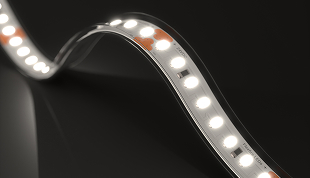
Professional LED lighting systems significantly expand the design range for landscape and hardscape projects when matched to the site's conditions. Make the correct specification decisions to ensure that your outdoor strip installation lasts. Consider IP ratings, high-impact placement, power distribution, and connection details.
High-Impact Applications
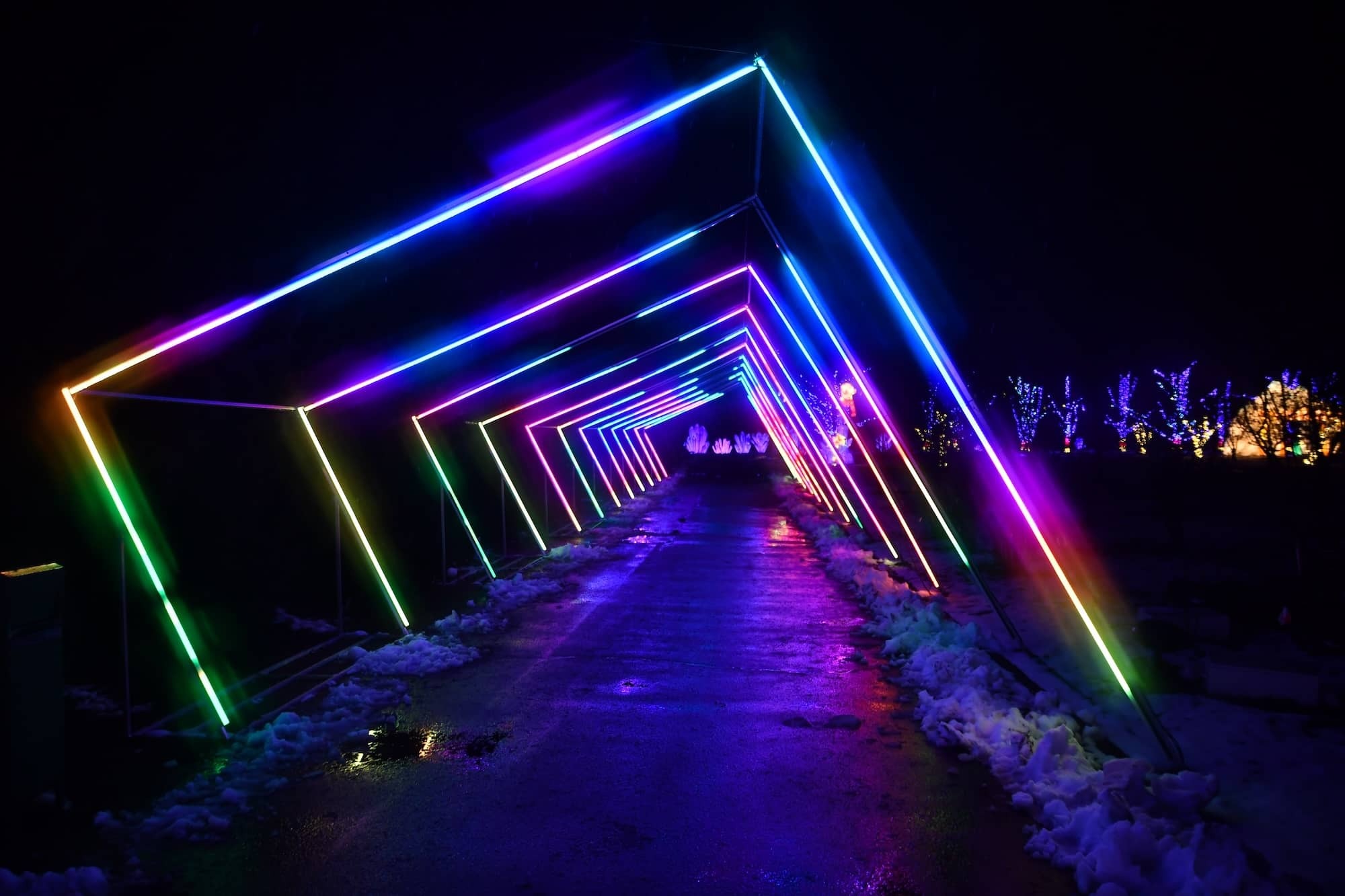
Many contractors don't realize how effective and versatile strip lighting can be in outdoor applications. The key is to treat the strip as an architectural tool, and specify and place it like any other lighting or design element. Some impactful places to use LED strip lights outdoors include:
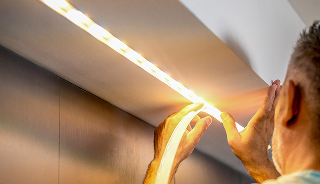
- Under-eave and soffit lighting: These applications produce one of the strongest visual impacts in residential and commercial landscape work. Strips installed along the soffit line wash light downward across the facade, define the building perimeter after dark, and add security value without requiring separate fixture mounting. This application is straightforward to install and produces dramatic results.
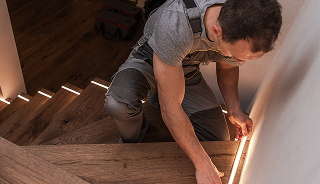
- Retaining walls and hardscape features: A strip mounted behind the top cap of a retaining wall or recessed into the face of a step defines the space's geometry at night. It can also reduce trip hazards at grade changes. For step and stair applications, mounting channels protect the strip and direct the beam downward, preventing glare for anyone approaching from below.
- Pathway and driveway borders: Low-profile channels mounted flush with pavers or along planting bed edges produce the defined, polished look that separates professional landscape lighting from basic solar-stake installations. These installations should be IP68-rated.
- Vertical surfaces: Places like fence lines, pergolas, and architectural screens respond well to strip lighting. This application can also extend the usable evening hours of an outdoor space.
Color Temperature and CRI
When selecting the correct color temperature for your project, note that warm-white sources in the 2700K to 3000K range work well in most landscape contexts where the objective is ambiance. For commercial exterior signage or building identification, slightly cooler sources in the 3500K to 4000K range produce cleaner, more readable results.
CRI (Color Rendering Index) should also be noted. Landscape features, plant material, stone, and wood all render differently under low-CRI sources. Specifying 90 CRI helps materials and landscape features appear more natural and closer to their intended colors. This is especially important in high-end residential projects and commercial exterior environments where the material selection is deliberate.
IP Rating
The most important specification decision for any outdoor LED strip application is the IP rating. An IP rating (Ingress Protection rating) is a standardized code that tells you how well an electrical device is protected. It lets you know exactly what the strip can withstand. The first digit (0-6) indicates how well the strip is protected from solid particles, such as dust and debris, and the second digit (0-9) indicates how well it is protected from liquids, such as water and humidity.
For most landscape and hardscape applications, IP65 is the standard starting point. IP65-rated strips withstand splashes and rain exposure from multiple directions, making them suitable for under-eave lighting, building perimeters, pathway borders, and most outdoor architectural applications. IP65 doesn't cover submersion, so avoid specifying it for applications where standing water collects around or over the strip.
A strip rated IP67 offers a higher level of water resistance for applications with more direct or sustained moisture exposure. Because IP ratings only address protection against the ingress of solids and liquids, not UV- or corrosion-resistance, verify that the strip's materials are suitable for coastal, marine, poolside, or other harsh outdoor environments. If you have a coastal installation, poolside perimeter, or exterior application in a high-humidity or marine environment, make sure to specify for the additional environmental exposure.
The mismatch between IP rating and actual site conditions is one of the most common sources of premature failure in outdoor lighting projects. Walk the site, assess the real exposure, and specify accordingly.
Power Distribution
Most LED strip systems run on low-voltage DC power. A driver is required to convert AC to DC and step the voltage down to 12V or 24V before it reaches the strip. In outdoor applications, driver placement requires more planning than in interior applications.
Hardwired drivers with weatherproof enclosures are standard for professional outdoor installations. Place drivers in a protected position where direct water exposure is minimal, even if the enclosure is rated for outdoor use. Junction boxes with knockouts allow conduit connections where required. This is important on projects where wire runs extend across the property.
Specify 24-volt systems for outdoor runs exceeding 10-15 feet. Voltage drop across longer runs causes the strip to dim the farther it is from the power source. 24V handles the distance significantly better and provides consistent power through the entire strip. On larger landscape projects with multiple runs branching from a central power point, 24V also simplifies the power distribution and reduces the number of drivers required.
For longer runs, 24-volt systems are often preferred because they reduce voltage drop and maintain more consistent brightness over distance. Whether a system can adequately power a run depends on factors such as:
- Strip wattage
- Wire gauge
- Feed location
- Run length
- The amount of voltage drop the design allows
If you're unsure whether a 12V or 24V system is the better fit for a project, work with a lighting supplier that can review the application, discuss the installation requirements, and verify compatibility across the strip, driver, controls, and accessories before ordering. A quick specification review can help prevent voltage-drop issues, component mismatches, and unnecessary installation challenges.
Waterproofing connection points between the driver, the controller, and the strip is as important as selecting the correct IP-rated strip. A well-rated strip attached to an unprotected connector or splice can still fail at the joint. Use waterproof wire connectors, outdoor terminal boxes, or heat-shrink tubing at all outdoor junction points.
Specs for Longevity
Soldering outdoor strip connections is one of the most time-consuming steps in wet-location installations. IP65 strips have a protective coating over the LEDs, so accessing the connection point requires pulling back the cover, soldering, applying silicone, and recapping. On a project with multiple connection points, the time adds up quickly.
Solderless connectors for IP65 strips reduce or eliminate the need for soldering. The connector clamps onto the strip mechanically, creating a secure connection without soldering. This connection reduces installation time on wet-location projects and produces consistent connection quality across every joint.
Mounting channels protect the strip from mechanical damage, direct the beam, and diffuse the output through a lens to eliminate hot-spot banding on nearby surfaces. For step lighting and grade transitions, channels also make precise beam aiming easier without repositioning the strip after installation. Specify the channel and lens together rather than selecting them separately, since the lens type affects diffusion, glare control, and the overall appearance of the light output.
In any application, confirm the actual exposure conditions before selecting the product, and document the specification decision for the project record.
Outdoor LED strip lights are an important part of design, but they can present unique challenges. Make sure you select the correct system for your project. Choose the correct IP rating, driver, and finishing products to ensure your LED light system showcases your exterior project's full potential. If you need help choosing the right lighting components for your outdoor project, our Flexfire team is happy to help.