
LED Strip Lighting for High-Impact Commercial Focal Points
Good lighting doesn't call attention to itself; it just makes everything around it look its best. A bar back becomes a visual anchor, a stone wall reveals depth, and art stops you in your tracks.
Customizable LED lighting is one of the most effective and versatile tools for creating these kinds of moments. It helps a space feel intentional. The right lighting can subtly signal to customers that you don't cut corners and that you value their experience.
Bar Backs and Liquor Displays
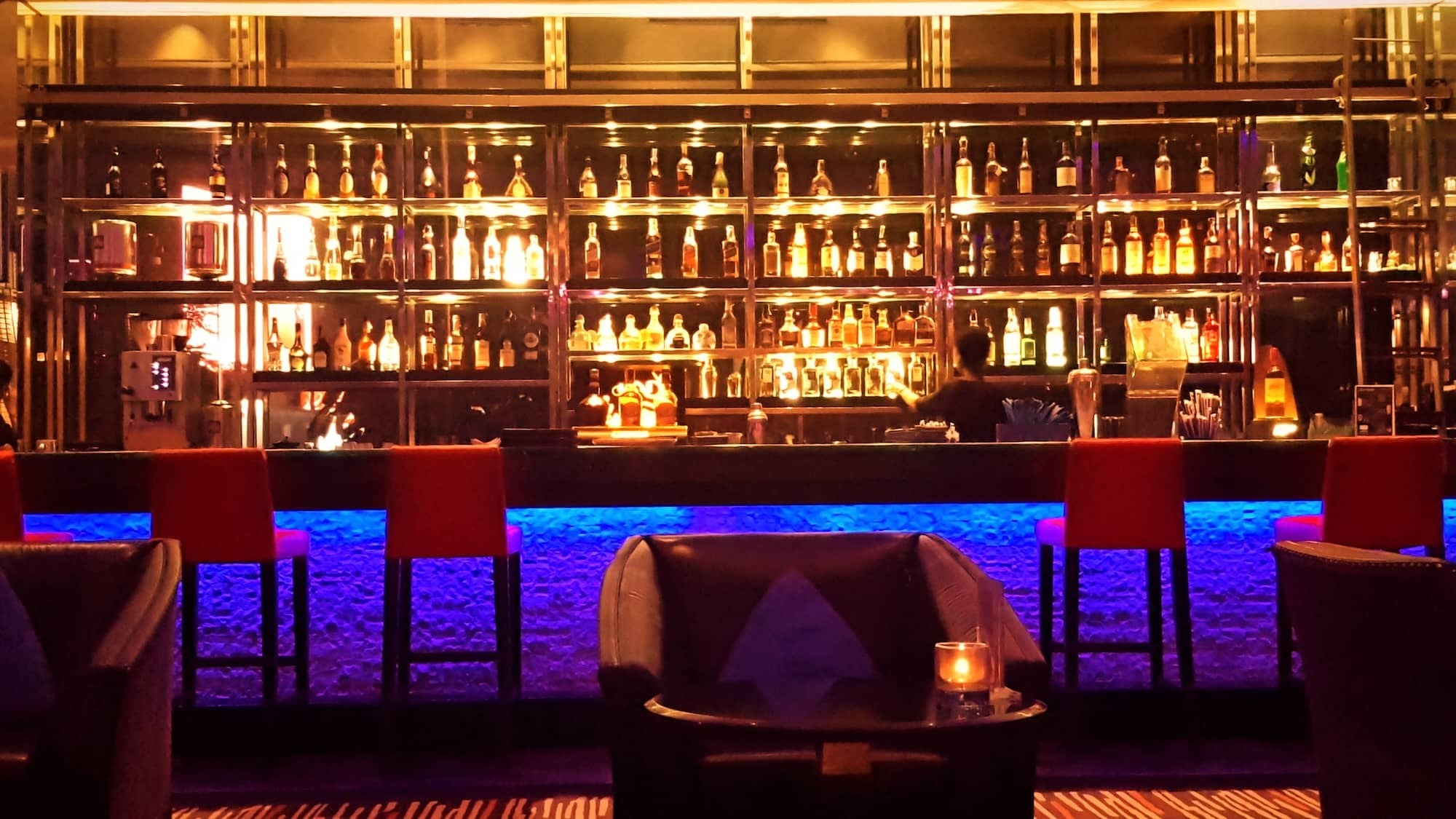
The back bar is the primary visual focal point of almost every commercial hospitality venue. Guests face it, photograph it, and form their first impression of a bar through it. The way it's lit directly shapes that impression.
Edge-lit or backlit shelving is the standard technique for lighting back bars. LED strips positioned beneath each glass shelf illuminate bottles and glassware from below, making the display appear to float against the bar's back wall. The effect creates depth and luminosity that overhead spotlights alone can't replicate. Combine the lit shelving with a well-organized bottle arrangement, and even a modest spirits selection reads as premium.
Color temperatures in the 2700K to 3000K range work well for most hospitality bar settings, maintaining warmth and cohesion with the room's ambient lighting. A high Color Rendering Index (CRI) of 90 or above is a good choice here. It renders bottle labels, liquid colors, and glassware accurately. A low CRI source flattens colors and weakens the lighting effect.
Keep the display consistent by confirming that all strips across multiple shelving tiers run at the same Correlated Color Temperature (CCT) and CRI. Mixed sources at different levels create an inconsistent display that undermines the effect, regardless of how good the individual strips are.
Reception Desks and Entry Details
A reception desk is the first point of direct interaction for any guest or client entering a commercial space. The lighting that defines it signals to the guest what to expect and how to proceed.
Under-fascia strip lighting is the most common technique here. A low-output strip mounted beneath the desk's face panel washes light downward across the floor, giving the desk a grounded presence that sets it apart. In hotel lobbies, this lighting detail subtly reinforces a sense of premium quality.
Back-illuminating the desk fascia panel is a more pronounced approach. When the desk face uses a translucent material (frosted glass, backlit stone, or an acrylic panel), mounting LED strips or panels behind the panel produces an even glow across the surface. A frosted diffuser between the strip and the panel prevents hot spots and creates smooth, even illumination across the full fascia width.
Side return panels and the vertical elements flanking a reception desk are often overlooked in the lighting spec. A strip running vertically behind a side panel, or a low-output cove channel built into the desk's return, extends the effect of the front fascia lighting, making the desk read as a complete, three-dimensional object rather than a flat face with a counter on top.
For commercial office reception areas, the right lighting approach depends on the space's use. A law firm or financial services company typically benefits from warm-white strips at low output that add refinement without drama. A creative agency or tech company might specify a cooler temperature in the 3500–4000K range to match a sharper, more contemporary identity.
Feature Walls and Backlit Panels
A feature wall gives the eye somewhere to go, but it's the lighting that reveals what makes it worth the attention.
Backlit panels give you the most control over the finished result. Stone, wood, and translucent panels glow evenly from behind when the strips are mounted correctly. Make sure to properly space the LED strips and maintain sufficient distance from the panel surface. Getting it wrong can create banding (visible hotspots that produce uneven light).
For textured surfaces like rough stone, board-formed concrete, or carved wood, grazing light is more effective than backlighting. Grazing places the strip close to and parallel with the surface, directing light across the texture rather than through it. This technique reveals the depth and dimension of the material in ways that frontal or overhead lighting flattens entirely.
The longer the shadows cast by the texture, the more dramatic the effect. Warm-white sources at 2700K to 3000K work well for stone and wood surfaces where warmth and richness are the intended outcome.
For smooth feature walls where the goal is a colored wash rather than texture emphasis, red, green, blue (RGB) strips are a good choice. Mount them in a cove or channel behind the wall perimeter to produce a clean, even spread of color or warm-white light across the surface. Red, green, blue, white (RGBW) strips add a dedicated white channel for cleaner neutral tones alongside the color options.
Artwork and Architectural Recesses
Often, artwork in hotels and commercial spaces is carefully chosen and intended as a focal point. The correct lighting ensures that the artwork gets the attention it deserves.
The standard approach is a strip mounted above the artwork and angled to direct light across the surface. Adjustable mounting channels allow precise beam direction, so the light covers the work without spilling onto the wall above or below, creating unwanted shadows.
CRI is especially critical for artwork applications. Paintings, prints, and mixed-media pieces depend on accurate color rendering to look as intended. A 90 CRI source is the minimum for most artwork lighting, while 95 CRI or above is valuable for galleries, high-end hotel corridors, and installations where the art is a deliberate brand or design statement.
Featured details and recesses are similar. Floating shelves, sculptural objects, and display alcoves can all be enhanced by a strip mounted within the recess and directed toward the back wall or downward onto the object. When this architectural accent lighting is mounted with channels offering directional options, precise aiming is possible without repositioning the strip after installation.
Finishing Details
In any of these lighting applications, a bare strip installed without a channel or diffuser rarely produces a polished result. Channels protect the strip and control the beam. Diffusers sit in front of the channel and blend individual light points into a smooth, uniform appearance. Together, they produce a consistent, seamless result. Build these elements in from the start for the best outcome.
Few lighting sources adapt well across so many applications, which makes LED strip lighting a great tool for anyone specifying or designing commercial interiors.