
Lighting Decisions in Hotel and Restaurant Branding
Imagine two restaurants serving the same menu. In the first, buzzy overhead fluorescents wash the room in a flat, harsh light. In the second, warm pendants hang low over each table, casting a soft glow.
The same dishes at the same price point, but one restaurant feels like a place to linger while the other feels clinical. That difference doesn't happen by accident. Lighting is an important part of brand identity.
A restaurant or hotel communicates a message before a guest reads the menu, speaks to a host, or checks in at the front desk. Music, furniture, and materials all contribute, but lighting shapes how everything is perceived. It changes how colors look, how food photographs, and how people feel in the room. Brands that take it seriously treat lighting as a strategic tool just as deliberate as the layout or logo.
Choose the Right Color Temperature
Color temperature is the most immediate lighting decision in a commercial space and a simple way to indicate to customers what to expect.
Sources in the 2700 K to 3000 K range produce warm, amber-toned light. In restaurants and hotels, this range communicates intimacy, comfort, and premium quality. Some spaces that typically benefit from this range include:
- Fine dining restaurants
- Boutique hotels
- Wine bars
- High-end cocktail lounges
Sources in the 3500 K to 4500 K range produce a cooler, more neutral output. It communicates a sharper aesthetic and reads more contemporary than cozy. This is a good color temperature for places like:
- Fast-casual restaurants
- Modern coffee shops
- Lifestyle hotels
- Fitness centers
Color temperature mismatches are a common problem and can send confusing signals to your customers. A fast-casual brand with a graphic, high-contrast identity that lights its dining room with warm 2700 K cove lighting creates brand inconsistency. The light says one thing, and the design says another. Both decisions need to serve the same message.
Understand CRI
Color Rendering Index (CRI) measures how accurately a light source shows color. A high-CRI source (90 or above) shows materials, finishes, food, and fabrics as they actually look in natural light. A low CRI source distorts and flattens color in subtle ways. Photographs look flat, and a room feels lifeless and bland.
For brands that have invested in a specific interior palette, custom finishes, or a carefully composed food presentation, low CRI lighting quietly undermines all of it. A leather banquette in a specific shade of cognac looks different under 80 CRI than it does under 95 CRI. A plated dish, artfully designed to look a particular way, renders differently depending on the source above the table.
High CRI LED lighting is an important way to protect your brand. Good lighting shows great design at its best. The guest may never consciously notice the lighting doing its job, but they often notice when the colors feel off, even if they can't identify why.
Specify CRI early, before installation. Specify the same CRI rating across every strip zone in a given environment to keep the brand experience consistent from table to table and wall to wall. Correcting it afterward requires replacing the strips, resulting in wasted time and money for all parties.
Use Color as a Brand Tool
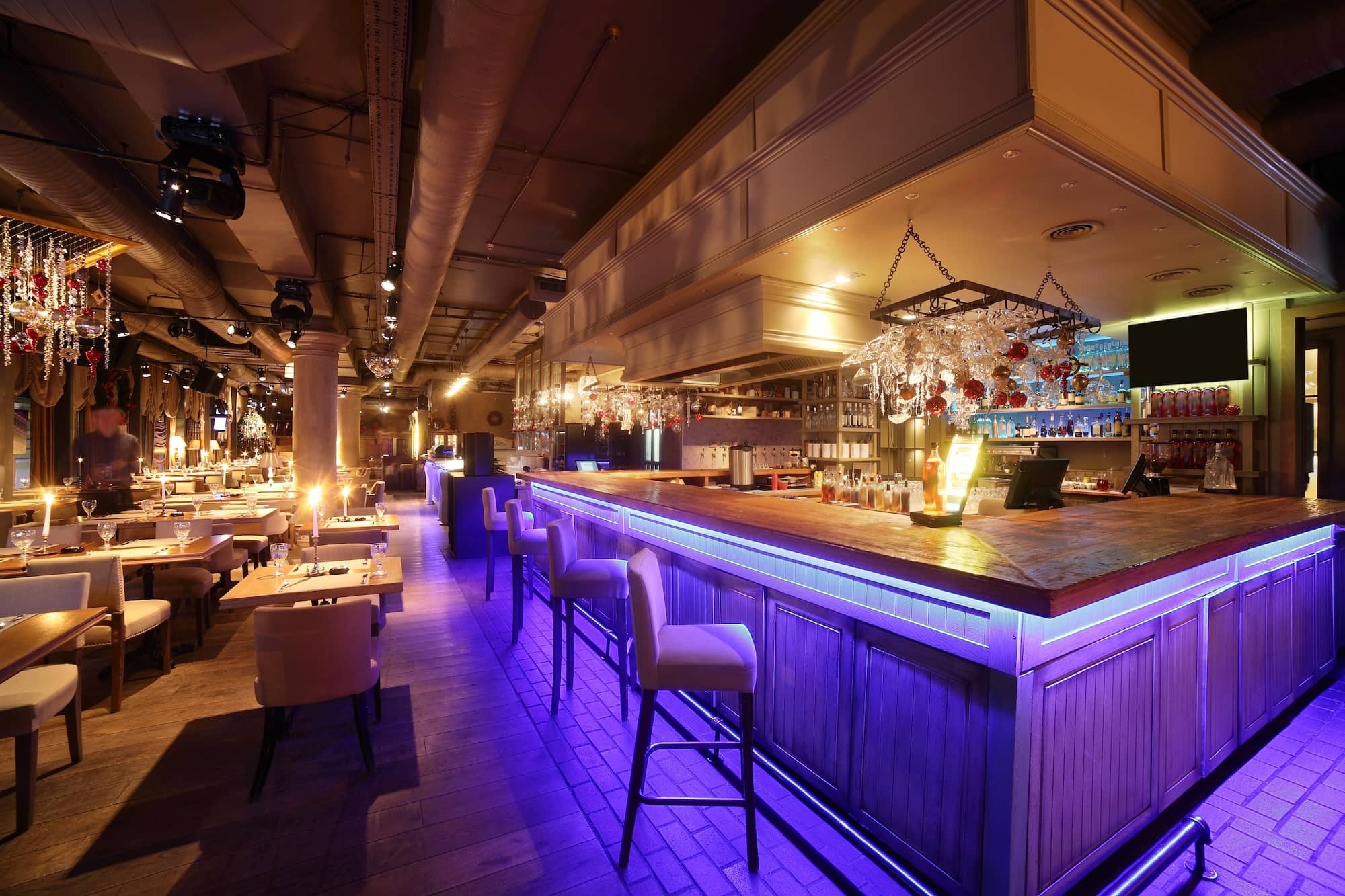
For brands that want a more direct approach to color, Red, Green, Blue (RGB) and Red, Green, Blue, White (RGBW) strip options allow colored light to become part of the brand palette rather than simply a backdrop.
RGB LED strips produce color-changing output across a wide spectrum. RGBW strips add a dedicated white channel to the three color channels, which produces cleaner whites and more accurate neutral tones, making the strip more versatile across different applications and events.
Companies with specific brand colors can use RGB and RGBW accent strips to bring those colors into the physical environment. If deep blue runs throughout a hotel brand, accent strips behind a lobby feature wall or beneath floating shelves are a clean way to bring it into the space. A cocktail bar with a signature palette can do the same thing behind the bar back or along the ceiling cove.
Colored accent lighting works best when it adds depth rather than dominating the space. The ambient layer should remain warm-white or neutral-white so that food, skin tones, and materials render accurately. When colored strips serve as accents rather than the primary light source, they can lead to more sophisticated results.
Adapt Light to Time and Occasion
A commercial space rarely serves a single function or type of guest at any given time of day. The same restaurant may host a business lunch at noon and a birthday dinner at eight. The same hotel lobby processes a morning rush of departing guests and a quiet late-evening arrival. Lighting that can't adapt to these shifts serves only one moment of the brand experience.
Smooth dimming is an essential tool for this kind of flexibility. Strip lighting paired with quality drivers and dimmers can transition from full brightness for midday service to a softer, more atmospheric output for the evening, without visible flicker or color shift at low levels. That range gives operators direct control over the room's energy throughout the operating day.
Tunable white LED strip lights go further by allowing both brightness and color temperature to shift together. A breakfast service benefits from cooler, brighter output. The space feels alert and clean. An evening dinner service benefits from warmer, dimmer output, lending the room a more intimate, refined atmosphere. With the right controls, these transitions happen smoothly, on a schedule or on demand.
Smart lighting controls extend this further for brands with more complex programming needs. Preset scenes allow operators to define a named state for each service period or event type and activate it consistently, without manually adjusting individual zones. The morning scene, the dinner scene, and the private event scene each feature lighting conditions that match that moment in the brand experience.
Lighting control decisions made at the specification stage determine how much flexibility an operator has after the space opens. A strip paired with a basic on/off driver offers no dimming or tuning after installation. A strip specified with a dimmable driver and a controller capable of tunable output serves the brand across every condition it operates in.
Plan It Right From the Start
Those two restaurants serving the same food have a critical difference. Only one of them is using lighting as a brand tool. The spaces that feel just right are usually the spaces that took lighting seriously from the start. Color temperature, color rendering, brand expression, and adaptability are most effective when planned together. Make these decisions early to achieve the ideal lighting setup for your space.
Video
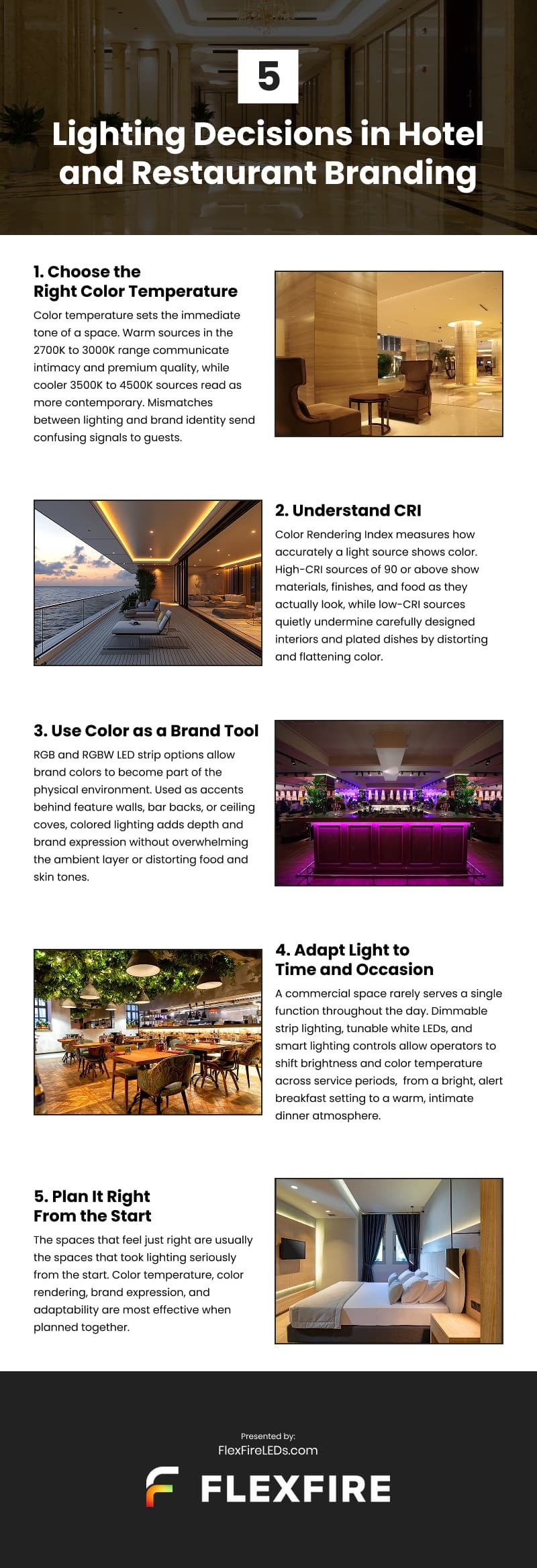
Infographic
Lighting shapes how guests feel, how colors render, and how food looks, making it one of the most powerful yet overlooked branding tools in hotels and restaurants. Explore five lighting decisions in hotel and restaurant branding in this infographic.