
RGB and RGBW Strip Lighting for Commercial Interiors
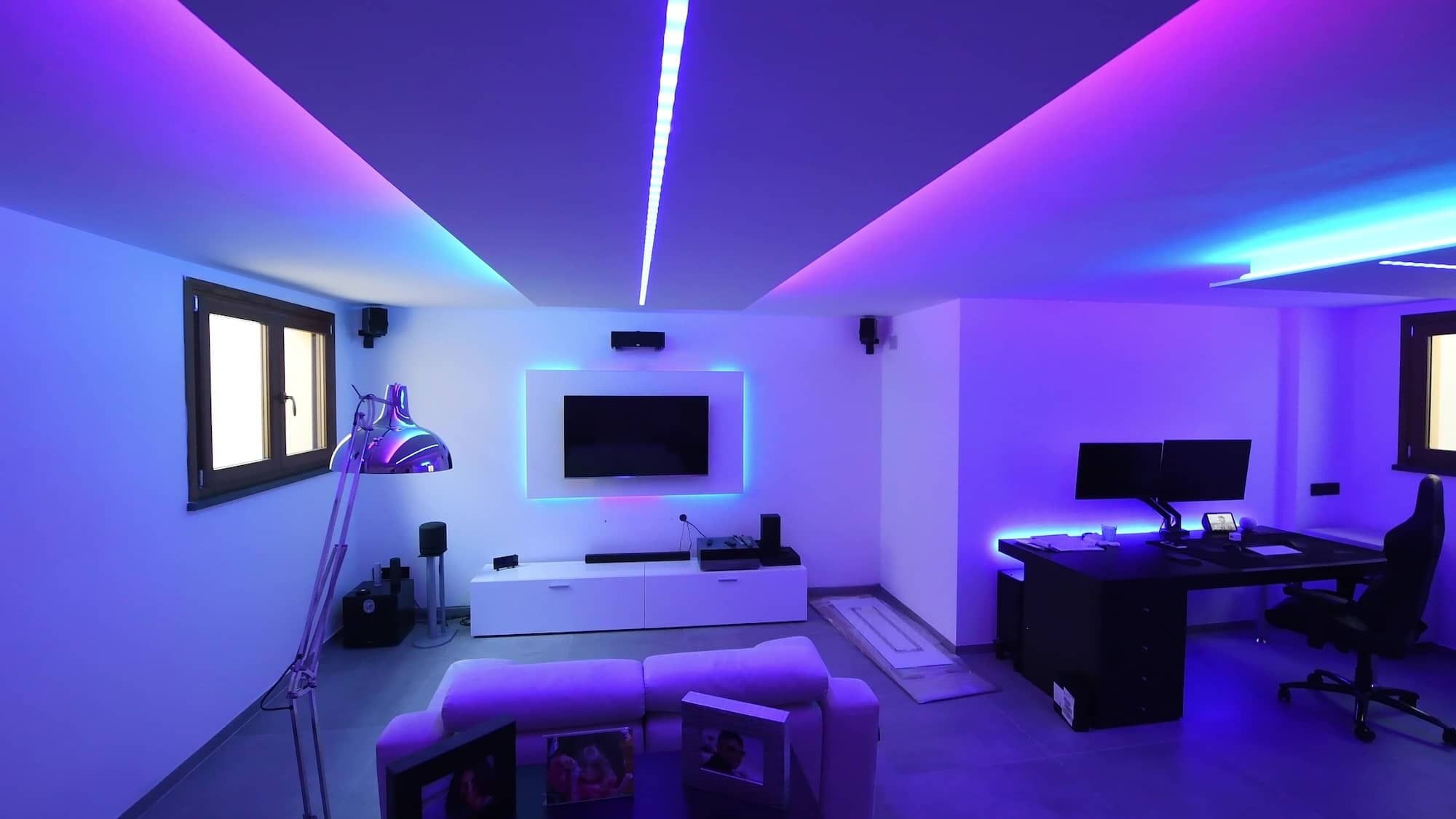
Color changes how a space feels. A bland room under neutral white lighting can change dramatically once you add dynamic lighting. The opposite is also true. Too much color can feel chaotic and unsettling. Simplify the palette, and you've created a room that's warm and inviting.
RGB and RGBW custom LED strip lights give you control over the colors that illuminate a space throughout the day, so your area can easily serve multiple purposes. When used right, they can turn the boring into something special. When planning or specifying your project, your choice between these two options can make or break your space.
Understand the Differences Between RGB and RGBW Strip Lights
RGB stands for red, green, and blue. RGB LED strips mix these three colors at different levels to produce a wide spectrum. It works differently from the color theory you learned in elementary school art class. With paints, red and green make a muddy brown, but with lighting, red and green make yellow. Mix all three colors on paper, and you almost get black. Do the same with your LED lights, and you'll get almost white.
RGBW strips add a fourth channel. You now have a strip with red, green, blue, and white. These strips can do everything RGB strips can while also giving you much more accurate and controllable white light options.
Consider How RGB and RGBW Strips Handle White Light Differently
The "white" you get from mixing RGB's red, green, and blue channels is only an approximation of true white, since it's built from three saturated colors rather than a dedicated white diode. As a result, it tends to carry a cool, desaturated color cast rather than reading as a clean, neutral white.
If your design needs more neutral or warm lighting, RGBW does the job. For most commercial applications, RGBW is the best choice. Places like hotel lobbies, offices, or gyms benefit from the consistent warm white light they provide.
When an RGB strip's mixed white is placed alongside true white light sources, such as RGBW strips or standard white fixtures, the difference becomes obvious and can look inconsistent and sloppy.
Know Where Color-Changing Strip Lighting Has the Most Impact
Color-changing strip lights perform best in a supporting role. Their role is usually to support the primary lighting and architectural features within the space. While this type of lighting is beautiful on a feature wall or bar back, you should typically avoid colored light for the dining zone, table surfaces, and anywhere food is displayed. The colors on the food and skin tones can be unflattering and undermine the experience.
Some excellent ways you can use strip lighting in your commercial projects include:
Bar Backs and Bottle Shelving
LED lights for bar shelves are one of the highest-impact applications. A strip behind the back wall of a bar, or beneath glass shelving, can change the bar's energy. These lights let you switch from a calm, warm white during standard service to an energetic, saturated accent color during an event.
Feature Walls and Architectural Coves
Hotel lobbies, restaurants, and event spaces are great candidates. The colored LED light strips can highlight the space's unique features and design. A backlit panel or cove can be lit to match the color of any event, holiday, or mood.
Entertainment Venues, Nightclubs, and Event Spaces
These spaces use RGB and RGBW strip lighting in high saturation for a dramatic effect. Here, colored lighting is part of the design. These lights contribute to the atmosphere and visual identity of the space. The ability to change the colors as the mood shifts keeps things from becoming stale.
Hotel Corridors and Elevator Lobbies
A strip in a corridor cove that holds 2700K white on a standard day can shift to a soft brand color for a private event floor or a seasonal promotion, without the full saturation of a bar or entertainment environment. This kind of subtle, programmed variation adds dimension to the guest experience without making the space feel like it belongs to a different property.
Retail Storefronts and Product Display Cases
You need lighting that can keep up with changing inventory and displays. Static LED strips offer one option, while RGB and RGBW strips have nearly unlimited options. These can elevate display windows and spotlight products through the changing seasons.
Keep the Details in Mind When You Spec
Both RGB and RGBW strips operate on 12V or 24V constant-voltage DC systems and require a driver and a compatible color controller.
Pay attention to the CRI (Color Rendering Index) of your RGBW strips just as much as you would for standard white strips. The white channel should carry a CRI of 90 or above. This spec keeps the colors in your space looking accurate.
The color temperature of the white channel should be specified to match the CCT (Correlated Color Temperature) of the surrounding ambient sources. A 2700K white channel in a 2700K ambient environment looks seamless. If the CCT is mismatched, the light can look wrong, even when the strip is in white mode.
Controls are the final variable. Color-changing strips without programmable controls reduce a flexible lighting system to a single color. A controller that supports preset scenes, scheduled transitions, and manual override gives operators full access to the strip's capabilities. You can program a warm white light for standard service, a brand color for a private event, and accent colors that change with the seasons.
You should always specify the hardware and the control system together. A strip installed without a capable controller, or with one that cannot support scenes and scheduling, won't be able to deliver the full range of what the strip can offer.
Use Color Effectively in Commercial Settings
The most common mistake with RGB and RGBW strip lighting in commercial interiors is overuse. When every surface in a space is color-tunable, the overall effect looks busy rather than intentional.
The best commercial applications keep the ambient lighting layer in warm white or neutral white and deploy RGB or RGBW strips as accents in specific, contained zones.
Color is one of the most powerful tools in a commercial interior, but it's also easy to get wrong. When specified correctly, RGB and RGBW strip lights allow you to intentionally shift the look and mood of a space.