
Simple LED Lighting Upgrades That Make a Big Difference
If your client knows their space needs something and turns to you to help define what that "something" is, LED strip lighting is a good place to start. It's an upgrade that delivers visible, immediate results clients appreciate and often ask for.
With minimal additional work, these projects can improve the look and feel of a space while also improving client safety and satisfaction.
Switch Bare Strips to Channeled Installations
Install a bare LED strip directly to a surface, and you'll probably have a dissatisfied client. Visible LED points create hot spots and banding on the adjacent surface. The banding is especially apparent on ceilings and reflective materials. From a few feet away, the lighting looks uneven and unfinished, even when the strip itself is a quality product.
When you mount that same strip in a channel with a frosted diffuser lens, the output is evenly distributed. It eliminates the dot pattern, making the light appear as a continuous line. This even light looks much cleaner and more professional, and is usually what a client expects from LED light strips.
Channels are a simple upgrade to make during a renovation or service call when you encounter a bare-strip installation. You don't have to change the strip, driver, or wiring to improve the project.
Specify the channel and lens together. The lens type influences beam angle and output softness, and a wider diffusion lens tends to create the most even result.
Add Under-Cabinet Lighting in Kitchens and Work Areas
Under-cabinet lighting is one of the most popular upgrades in residential and commercial kitchens. Clients use their counters every day, and a well-lit surface makes a huge difference.
Overhead fixtures light the room, but cast shadows directly beneath the upper cabinets. A strip mounted under those cabinets eliminates the shadows and adds direct task lighting exactly where it is used most. The counter is safer, and the materials look better.
A CRI (Color Rendering Index) of 90 or above should be specified here. Counter materials, tile backsplashes, and food preparation all look more accurate under high-CRI sources.
Color temperature varies by application. 2700K to 3000K works well in most residential kitchens where warmth and ambiance matter. 3500K to 4000K is well-suited to commercial prep areas where task clarity is the priority.
This upgrade installs quickly with plug-in drivers for simpler residential applications or hardwired drivers for commercial settings. It improves the client's experience of the space every time they use the kitchen, making it one of the most-used and appreciated improvements.
Install Cove Lighting to Transform a Ceiling
Cove lighting can have a huge impact with little effort. The cove is the gap between the ceiling and wall where an LED strip is installed to wash light upward across the ceiling surface. This lighting gives you a soft, warm ceiling instead of a dark, shadowy plane.
Spaces that rely entirely on downlights and recessed fixtures can feel clinical regardless of the quality of the furniture and finishes. The addition of cove lighting immediately changes that. The room looks taller, shadows soften, and the space feels more inviting.
Cove installations require planning for power-supply placement and channel positioning before ceiling construction is complete. For retrofits, contractors can often route power through existing pathways and mount channels in a built-up cove profile added to the wall-ceiling junction. A lens directs light cleanly upward and prevents the strip from being visible from below at standing height.
Color-temperature matching matters where cove lighting appears alongside other sources in the same room. For example, you should specify 2700K for a space with 2700K pendants or table lamps to maintain consistency.
Add Step and Stair Lighting
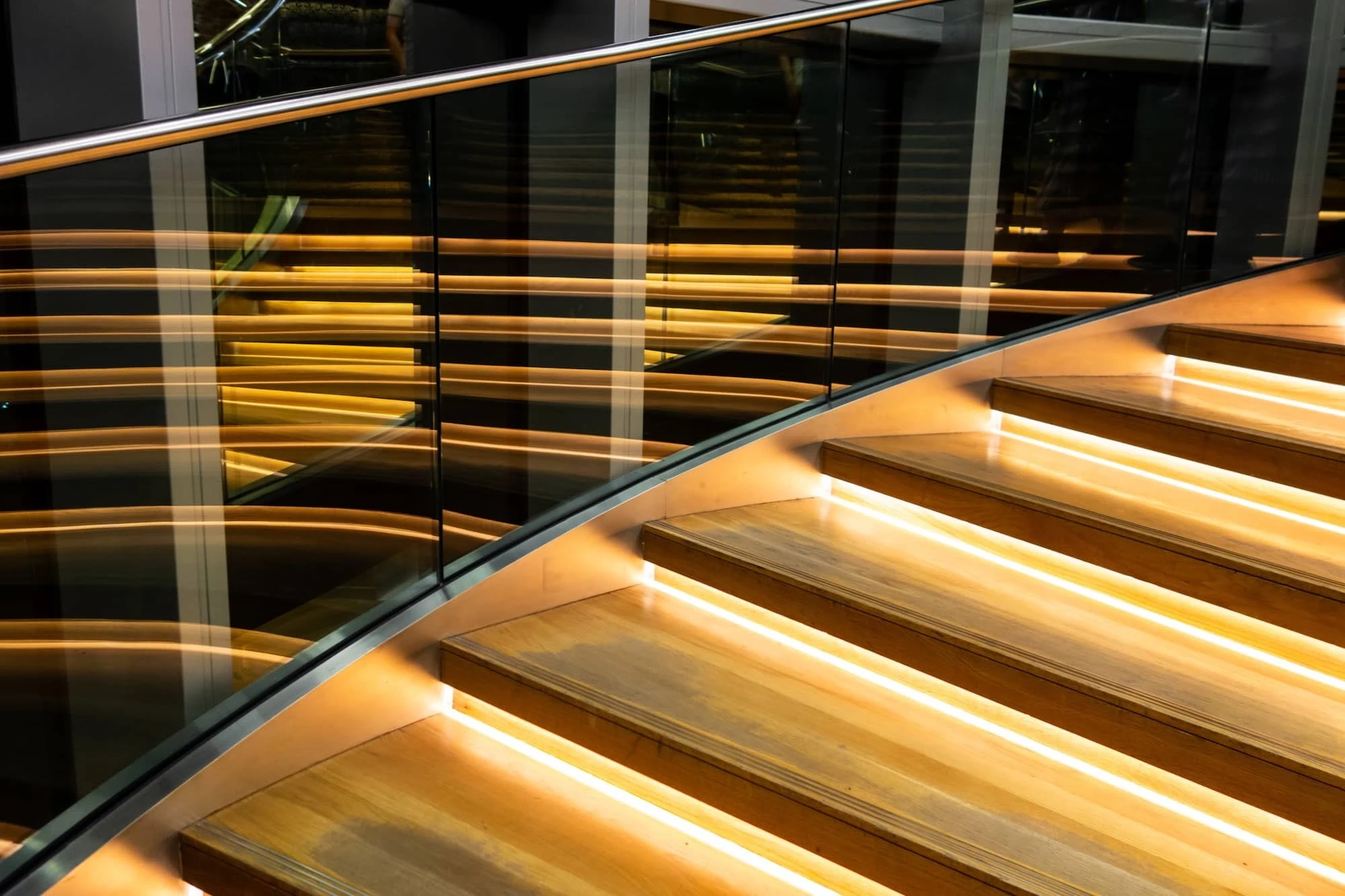
Step and stair lighting is another appreciated upgrade that clients notice. It combines a practical safety function with a visual detail that significantly elevates the finished quality of an installation.
Low-profile channels recessed into the stair riser or tread edge produce a clean, directed line of light. That lighting highlights each step without creating glare. The output level should be low enough for wayfinding rather than task lighting. You want the edge of each step visible without brightly illuminating the entire staircase.
For exterior step applications, confirm the IP (Ingress Protection) rating matches the actual exposure conditions. IP65 LED strip lights handle splashes, light rain, and moderate moisture exposure well, making them suitable for most exterior stair work. Interior stair lighting typically uses dry-location strips.
Stair lighting is well-suited for residential staircases, hotel corridors, commercial lobby stairs, and entertainment venues. It's also the kind of detail clients notice in other spaces and want for their own.
Match the Color Temperature to How the Space Is Used
The right color temperature can transform a space, yet choosing the wrong one is a common problem in LED strip installations.
Look at the CCT (Correlated Color Temperature) of your strips. Lights in the 2700K to 3000K range are ideal for living spaces, bedrooms, and hospitality environments where warmth and relaxation are the objective. Higher numbers in the 3500K-4500K range indicate cooler temperatures. These lights work well in home offices, commercial workspaces, and task-focused areas.
If a space feels cold or harsh even with adequate light levels, the CCT may be too high. Adding more fixtures in the wrong color temperature usually amplifies the problem rather than solving it. Replace the existing strip with the right CCT and fix the problem at the source.
Similarly, if you have plenty of light but still feel you can't see a work area clearly, your lighting is probably too warm. The solution is changing to a higher CCT, not adding even more lights.
For clients who use a space differently at different times of day, tunable white strip light systems eliminate the need to choose a single CCT. A tunable white strip can hold 3500K for a focused morning work session and shift to 2700K in the evening for a more relaxed atmosphere, all from the same installation.
Clients often appreciate the flexibility of a tunable system even more than a correctly specified but static lighting setup. Preferences change over time, as does the way a space is used. A tunable lighting plan gives your client the ability to meet evolving needs.
Build These Upgrades Into Every Project
Each of these upgrades is straightforward to install and delivers noticeable, appreciated results. To give your clients these easy wins, make sure you have the right combination of strip, driver, channel, and controller so the system performs correctly.
Our team at Flexfire LEDs reviews every order for component compatibility across every variable before it ships. We can also discuss CCT and other specs to make sure your product choices match your goals and your client's vision for the space. Contractors building these upgrades into regular projects can access same-day bill-of-materials quotes and professional project support through Flexfire PRO, our partner program built for installers, designers, and contractors who order regularly.
Video
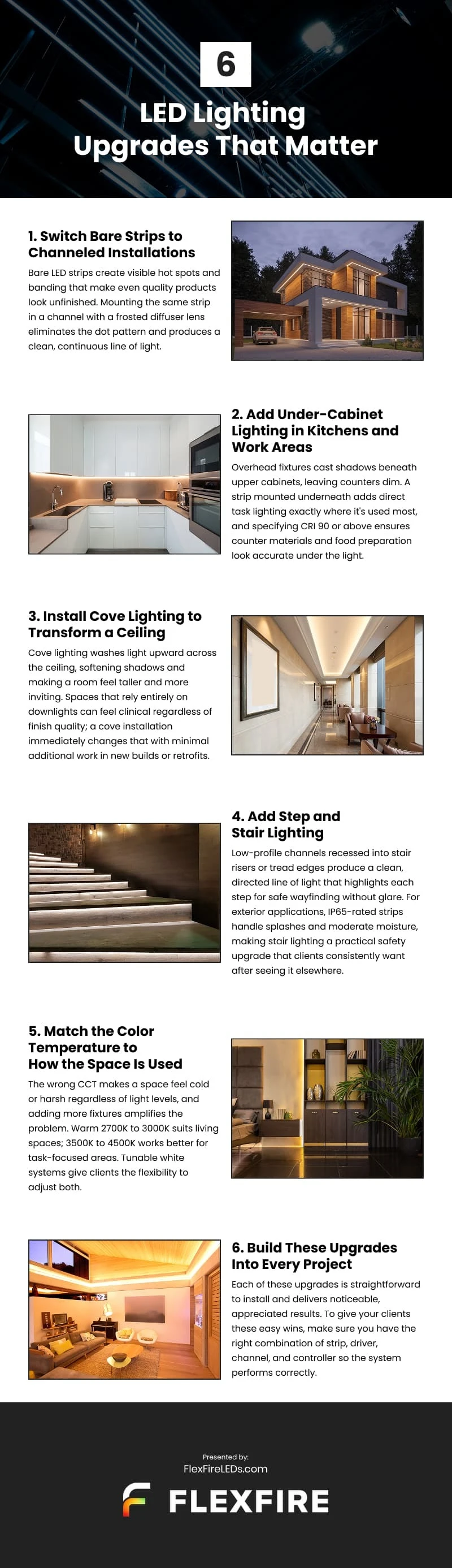
Infographic
LED strip lighting delivers visible, immediate results when the right upgrades are specified correctly, and these six improvements are straightforward to install and consistently appreciated by clients. Explore LED lighting upgrades that matter in this infographic.