

What's the Best LED Color for Living Room Lights?
Choosing between warm light, tunable white, or an RGB color LED strip for living room lighting? Learn which LED color works best for your space.
- -There isn't a single best lighting color for every living room. While white remains the classic choice, RGB lighting offers greater creativity and flexibility for different occasions.
- -Your living room's lighting color should reflect your personal style, how you use the space, and the atmosphere you want to create, among other interior design guidelines.
- -For maximum versatility, an RGB + tunable white lighting system lets you switch between thousands of colors and every shade of white to suit any living room moment.
Color is one of the first things we think about when remodeling a living room or designing one from scratch in a new home. We carefully choose the tone of the sofa cushions, the paint on the walls, the rug beneath the furniture, and some of us even go so far as to coordinate the spines of our books and decorative objects by hue.
Yet most people—whether because they don't realize just how customizable modern LED lighting has become or because they're focused on brightness, fixture placement, and other technical details—completely overlook one of the most important design choices in the room: the color of the light itself.
Is it true (or just a myth) that living rooms should always have white lighting? Should you stick with tradition, or is there room for a more creative approach with colored lighting? Today we'll answer questions like these and help you choose the best color lighting for your living room.
Which LED Light Color Is Best for a Living Room?
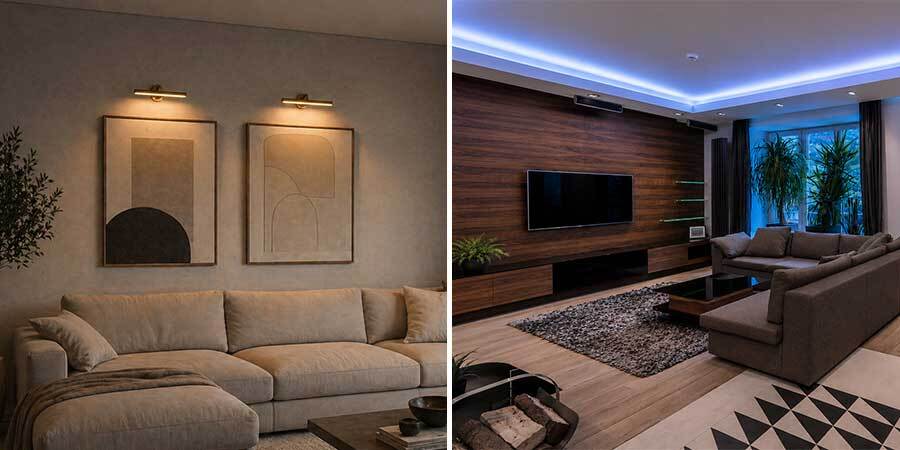
Let's start with one key statement: No two living rooms are exactly alike, and there's no one-size-fits-all rule when it comes to choosing the right lighting color. Your living room might benefit from white lighting or specific colors. The lighting that creates the perfect atmosphere for entertaining guests in your home may not work nearly as well in your neighbor's living room or your parents'.
A number of factors come into play when deciding what's best. Are you the type of person who proudly displays a carefully curated collection of Star Trek or Star Wars memorabilia and LEGO® sets? Or do you lean toward a minimalist aesthetic? The first homeowner might love using dramatic accent lighting to give those collectibles a more immersive, outer-space feel, while the second would probably prioritize subtlety and more muted tonalities.
Fortunately, you don't have to be an expert in LED color psychology or deeply analyze your personality to make the right choice (although both can certainly be fun and surprisingly helpful!) A handful of practical questions and design considerations will point you in the right direction:
- What is the primary purpose of my living room? If you live by yourself and use the space mainly for work-from-home tasks, you’ll likely need cool lighting shades, while socializing, parties, and family activities might involve more color and warmth.
- What type of gatherings do I organize? The color of your lighting should match the kinds of events you host. The lighting that's appropriate for a formal gathering (like a prayer group) will be very different from the colorful atmosphere of a bachelor party.
- What kind of atmosphere do I want to create? Whether you're alone or entertaining guests, mood also plays a major role. If you're feeling creative, you might enjoy vibrant, dynamic colors. If you're looking to unwind or create a calmer, more understated atmosphere, softer or more neutral lighting will likely be a better fit.
- What colors dominate my walls, furniture, and decor? Purple lighting can make certain yellow objects glow with an almost neon effect. Likewise, a green wall will naturally appear more vibrant under green lighting. These are the kinds of color interactions worth considering when planning your lighting design.
- How important is accurate color rendering for my space? If your goal is to make the colors of the objects in your living room stand out (such as the bold tones of a pop art painting), white light is usually your best choice, since it renders colors more naturally and accurately than colored lighting.
- Do I want my lighting to feel warm and cozy or bright and energizing? The color of your lighting—especially if you're choosing between different shades of white—should reflect how you use your living room. Is it where you relax after work, or is it a space for focused activities like reading, detailed hobbies, or meticulous cleaning?
- What style best describes my living room (modern, traditional, minimalist, eclectic, etc.)? Your home's architectural style and furniture will also influence your lighting choices. Traditional, classic, or highly elegant interiors tend to look their best under white lighting, while colorful lighting often feels right at home in living rooms that reflect artistic personalities, alternative styles, or more liberal tastes.
- Who uses the living room most often? Grandma may use the space for knitting and reading magazines and will probably appreciate bright, white lighting. Your kids, on the other hand, might have a lot more fun playing The Floor Is Lava under bold red light.
- How will my living room lighting coordinate with adjacent spaces? In many modern open-concept layouts, the living room flows directly into the kitchen or dining area. In those cases, the color of the lighting in adjacent spaces becomes an important factor—you'll want the different areas to complement each other rather than compete.
Once you've thought through these questions—and understand how they'll shape your lighting decisions—it's time to take a closer look at the characteristics and effects of each lighting color. Whether you're installing full fixtures or LED strip lights in your living room, understanding what each color brings will help you create a space that looks and feels exactly the way you want.
What Is the Best White Light for a Living Room?
White is the most timeless color choice for living room lights, and it perfectly embodies the old saying: "If it ain't broke, don't fix it." It's no coincidence that it dominates living room inspiration on Google Images, in interior design magazines, and among our own customers. As the living room is the home's primary social space—the one that's most often seen by guests—white light creates a sense of brightness, cleanliness, and visual order.
The next question is which shade of white is right for your space. But regardless of the one you choose, make sure you're investing in high-quality white light, not just any white light. Look for the following features:
- High CRI: A near-100 Color Rendering Index ensures your lighting reveals the true colors of artwork, furniture, fabrics, and other details worth showcasing throughout your living room.
- 100% Dimming: Full-range dimming gives any shade of white far more versatility. It lets you fine-tune brightness for different occasions, create layered living room lighting, and adjust the glow of individual light sources throughout the room.
- Zero Flicker: Low-cost bulbs often rely on inexpensive electronics that produce rapid flickering. Even if you can't consciously see it, your eyes and brain still detect it, which can contribute to headaches and eye strain over time.
- Consistency Across Fixtures and Spaces: Try to avoid mixing different shades of white in the same room (or even in neighboring rooms). For example, your TV backlighting shouldn't have a noticeably different white tone than the lighting around your coffee table. This becomes even more important in open-concept homes, where the living room flows into the entryway or a home office.
Which Light Temperature Is Best for a Living Room?
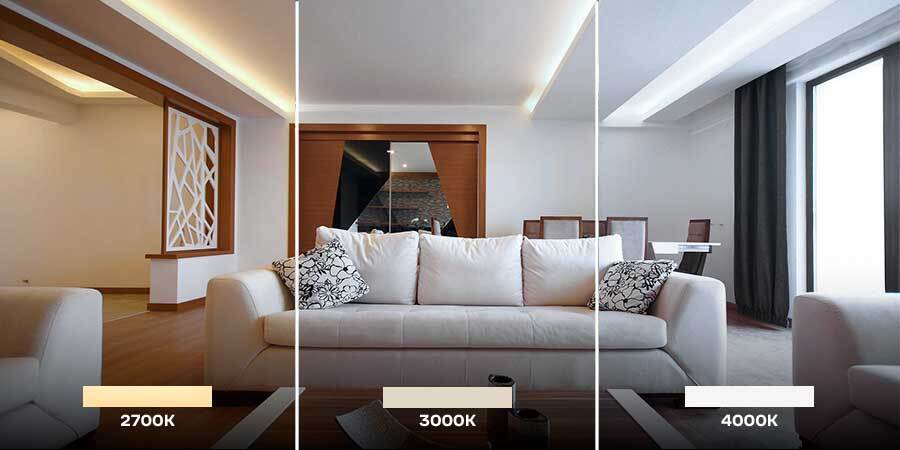
If you can only choose one option for your living room, the general recommendation is to go with warm white lighting. That's because, in most homes, the living room is primarily a space for relaxation, entertainment, spending time with loved ones, welcoming guests, and showcasing the things that make your home feel personal—not work or tasks. Warm white light naturally complements these activities by creating a comfortable, inviting atmosphere that encourages people to linger.
But what does this general recommendation actually mean in technical terms? It helps to understand or remember what Correlated Color Temperature (CCT) means for your space.
CCT measures the appearance of white light on the Kelvin (K) scale. Lower Kelvin values (below 3500K) produce warmer, more yellow-toned light that feels cozy and inviting. Mid-range temperatures (roughly 3500K to 4000K) create a more neutral, balanced white, while higher temperatures (above 4000K) produce cooler, crisper light that's better suited for focus, productivity, and detail-oriented activities.
Is Cool White Good for a Living Room?
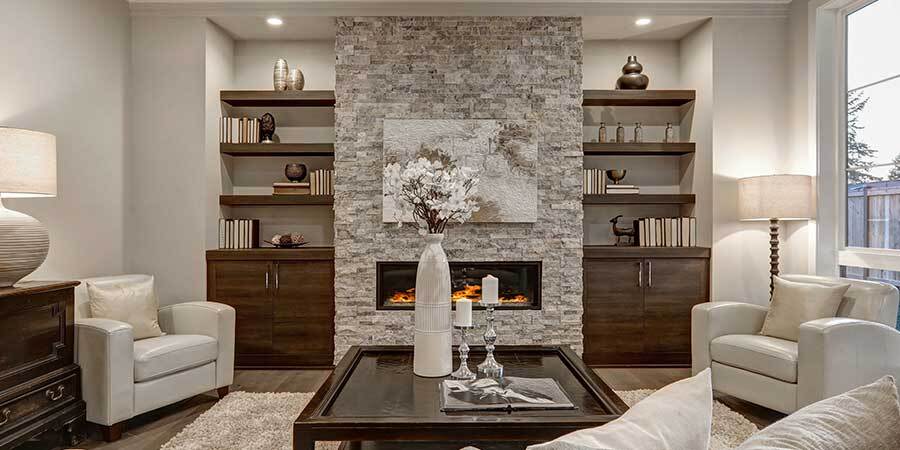
In a living room, where the goal is usually to kick back on the couch, cool white light can often feel a little too overwhelming. That's because at around 4000K to 5000K, it has a crisp, bluish tone that helps keep your brain alert. While that's fantastic for focusing in the kitchen or at your garage workbench, it's not always the most relaxing choice for a space designed for comfort.
That said, there are plenty of situations where cool white lighting makes sense in a living room. If your space doubles as a home office, reading nook, or serves as your favorite spot for hobbies that require visual precision, cooler light can be a great fit. Whether you're working through a crossword puzzle, knitting, crocheting, or taking a peek at the newspaper, the added clarity can make those tasks more comfortable.
It can also be a smart choice if your living room occasionally hosts more formal or productivity-focused gatherings, such as meeting with clients or colleagues.
Is Warm White Light Good for a Living Room?
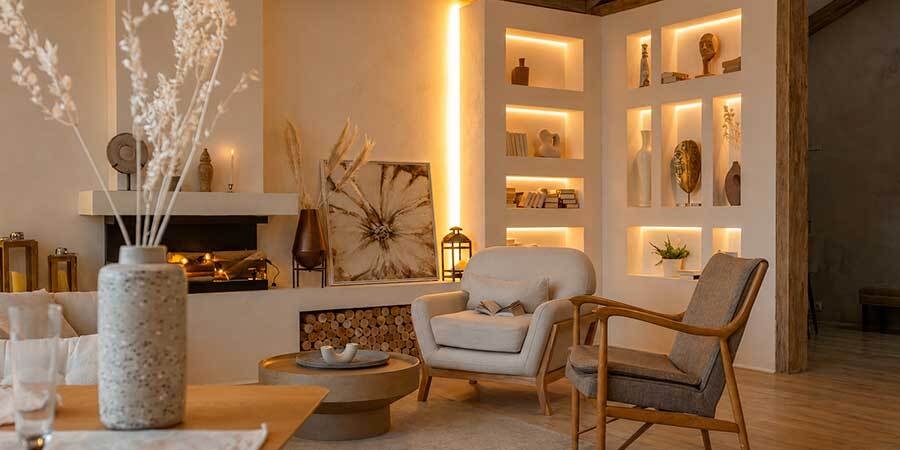
Warm white is pretty much the go-to standard for a living room. Dropping in somewhere between 2700K and 3000K, this light has a golden hue that instantly tells your nervous system, "Hey, the workday is over, time to relax in the living room."
It makes rich wood tones look deeper, softens room angles, and—as an extra benefit—is notoriously flattering on human skin tones, meaning your family and guests look great during board game night or heartfelt conversations. It can even make up for the absence of a fireplace, as its candlelit glow creates much of the same cozy ambiance.
Is 3000K or 4000K Better for a Living Room?
3000K is a winning color temperature for most living rooms. 4000K is clean and invigorating—think of a bright, modern kitchen or a well-lit bathroom vanity—but in a living room, it can easily make your comfy sofa look like a waiting room couch.
3000K gives you plenty of functional visibility while keeping the atmosphere welcoming. The only time 4000K really makes sense in a living room is if you live in a modern, ultra-minimalist space dominated by stark whites, greys, and concrete, or, like we mentioned above, if your living room is primarily used as a work area during the day.
Is 3000K or 2700K Better for a Living Room?
This one comes down to how you actually use the room, because both warm CCTs are fantastic options. 2700K is cozier, as it closely recreates the glow of traditional incandescent bulbs with an amber-tinted light that's perfect for late at night. 3000K, on the other hand, makes your book and rug colors pop a little more while still keeping things warm.
A good rule of thumb? Go with 3000K if your living room gets a lot of daytime action, kids playing, or reading, and choose 2700K (or use dim-to-warm technology that reaches even lower, more restorative-sleep-friendly options) if your living room is your strict go-to space right before bed for TV, downtime, or bonding with your partner.
Is Tunable White Suitable for a Living Room?
When it comes to living room whites, the most versatile option is undoubtedly tunable white LED lighting with a compatible smart lighting system. This gives the space the flexibility to adapt to virtually any situation. Need cool white light while your child is doing homeschool lessons in the living room? No problem. Later, you can switch to a warm white tone when it's time for them to close the laptop, play with their toys, or enjoy an afternoon snack.
Another major advantage of tunable white lighting is its ability to better support your circadian rhythm. While the term may sound highly technical, it’s just part of your body's internal regulation. When your light exposure more closely follows the natural progression of sunlight throughout the day, it can support healthier sleep patterns, improve your mood, and even benefit a variety of metabolic and cognitive functions.
Because the living room is one of the most frequently used spaces in our homes—we pass through it on our way to other rooms, decompress there after work, entertain guests, and, for many people, even work from it—it stands to benefit more than almost any other room from multiple white tones and their ability to make our living rooms a fundamental part of our healthy habits.
Are Colored LED Lights Good for a Living Room?
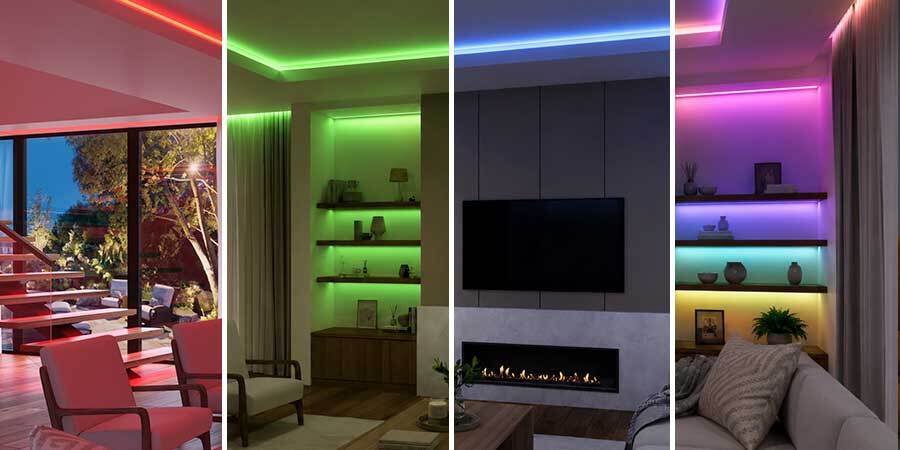
Colorful scenes can work in your space, mostly as living room mood lighting, but the secret lies in moderation. Think of single-color lights or RGB lighting as a strong spice in the tasty recipe your living room is, so a little goes a long way.
Flooding your entire living room in neon tones from a central ceiling fixture for prolonged (or even worse, permanent) periods will quickly make it feel like a budget nightclub. But when used accentually tucked under your TV console or sofa, colored LEDs let you instantly shift the mood of the room without changing a single piece of furniture.
Why Would Someone Have a Red Light in Their Living Room?
It might look a little dramatic for some tastes, but red light serves a remarkably practical purpose late at night. Red light has the longest wavelength in the visible spectrum, meaning it doesn't disrupt your body's melatonin production or trick your brain into thinking it's daylight the way blue or white light does. So, it becomes a great alternative for more expensive or sophisticated tunable white settings.
If you’re slowing down with a nightcap at 11:00 PM or watching a thriller in the dark, switching to a low scarlet or bloody red backlight lets you navigate the living room without killing your night vision or ruining your sleep cycle. Plus, during a sci-fi film marathon or spooky movie night, it sets a killer cinematic mood.
Is Green Color Good for a Living Room?
Green light is surprisingly underrated, mostly because people picture an eerie, alien-invasion or radioactive glow. In reality, green is one of the most soothing colors for the human eye; it’s why stepping into a forest instantly feels calming. In a living room, a soft emerald or sage-toned accent light works wonders when paired with indoor plants, wood accents, botanical wallpaper or tapestries, or neutral decor.
Imagine washing a corner full of monstera, cacti, and pothos plants with a gentle green backlight… It instantly elevates the room into an organic, luxurious indoor garden that feels refreshing and provides peace after a long day staring at laptop screens!
Can I Use Blue Lighting in My Living Room?
You definitely can, but when you use it makes all the difference. Blue light increases alertness and boosts focus, which makes it awesome during a late-afternoon gaming session or when you're entertaining your work buddies for Friday night drinks and want a lively, high-energy atmosphere.
However, you’ll want to shut it off an hour or two before bed. Because blue wavelengths closely resemble noon daylight, leaning on blue light while relaxing on the couch late at night can leave you tossing and turning when your head hits the pillow later that night.
Are the Colors of RGB LED Strip Lights Good for My Living Room?
Looking to create more elaborate color schemes for a special occasion? Or maybe you want to transform your living room into the dance floor for your next party?
If you'd like to bathe your space in pink for your daughter's Barbie or Hello Kitty birthday bash, light it up in your favorite team's colors for the Super Bowl, match the spirit of a holiday, or simply experiment with thousands of different shades—including the three tones we discussed above—an RGB LED strip is your best option.
Installed as subtle, indirect accent lighting, it lets you completely transform the mood of your living room without overwhelming the space. They're the ultimate solution for meetups and other special celebrations, giving you the freedom to "paint" your living room with color for a few hours without ever having to pick up a paintbrush.
Still Unsure What Color Light Is Best for a Living Room? Ask Flexfire
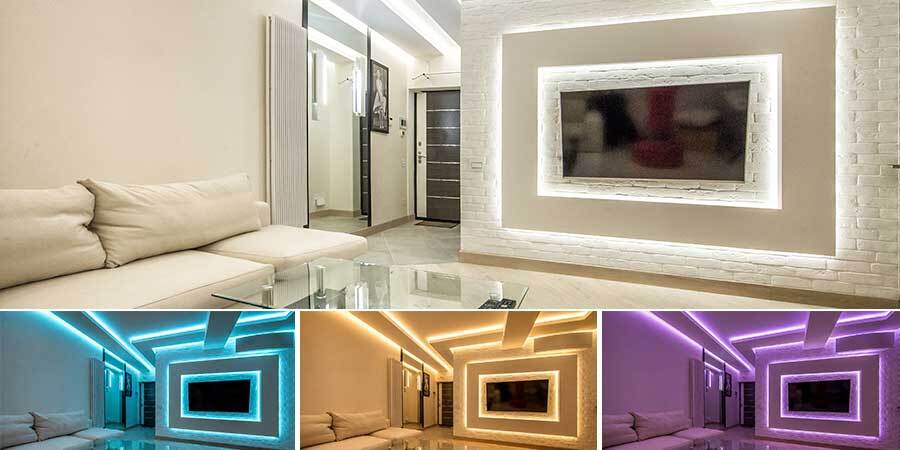
As you've seen, choosing the right lighting color for a living room isn't always straightforward. With so many possibilities and factors to consider, it's easy to feel overwhelmed. That's exactly why the most future-proof solution is to have every option in a single product.
An RGB + tunable white LED strip gives you access to thousands of colors along with a full range of adjustable white light. That means you can go from a warm, fireplace-like glow or festive Christmas green to crisp cool white lighting for collage and handicraft making—or just about anything else you can imagine—with the tap of a button.
Even better, it lets you experiment in real time once it's installed. You can instantly see how different colors and white temperatures look with your walls, furniture, artwork, and material finishes, helping you discover what works best for your space. Whether you follow the design principles we've covered in this guide or simply trust your own taste, you'll have the freedom to adapt your lighting whenever your living room (and your life) changes.
In many ways, that's what makes this technology perfect for the living room. Living means change. It means charades nights, family BBQs, quiet evenings alone, holiday movie marathons, creative projects, game days, and everything in between. Your lighting should keep up with every moment.
And if you're still not sure which color, white CCT, or specific LED strip is the best fit for your living room, we're here to help. No matter if you need advice on matching your existing decor, choosing the right product, or planning the perfect lighting layout, our team of LED lighting experts is always happy to answer your questions, whatever their color.
