
What Is Bedroom Mood Lighting? Colored Lights & Other Ideas
Do bedrooms need to use only white light? Are colorful lights suitable for the bedroom? Get answers to this and more about bedroom mood lighting.
- -Bedroom mood lighting is as important as task lighting for activities beyond sleep and focused tasks.
- -Smart controls and dimming, along with warm whites and specific LED colors, create different bedroom moods without major renovations.
- -Blue, cool-white, and bright neon lighting can disrupt sleep and are best avoided for bedroom mood-setting.
Even if it's the room where you sleep and take afternoon naps, your bedroom usually works harder than almost any other room in your house. That's why, during the day, it needs stimulating, reliable light so you can pick out an outfit on a rushed Monday morning, fold clothes, tackle daily cleaning, and change the sheets, among other tasks.
Once evening rolls around, though, that same brightness and stimulation can feel jarring and unnecessary—at odds with how you actually want to spend the end of your day, and with your eyes' need for a calmer setting after hours of exposure to computer screens and office lighting.
That's where bedroom mood lighting comes in: illumination that prepares your space for cozy, atmospheric moments instead of practical daytime tasks. Whether you're jumping on your bed to your favorite songs or easing into a pre-sleep wind-down ritual, mood lighting helps set the tone without overbearing glare and by using gentler hues to create a more relaxing environment.
In this guide, we'll break down what bedroom mood lighting actually is, the types of lighting to combine to get the effect right, and which LED tones work best for different bedroom routines.
What Is Mood Lighting in a Bedroom?
At its core, bedroom mood lighting is any light source used to shape how your personal space feels rather than simply illuminate a surface for reading, working, or other activities. Think of a groovy lava lamp beside your TV, fairy lights draped over a canopy bed, or the colorful glow of a gaming setup if you play video games from bed.
What all these examples have in common is that they use light to evoke a particular feeling. Unlike a central overhead light that floods the room with brightness, mood lighting relies on often indirect illumination to soften pronounced shadows, reduce eye fatigue, and give your bedroom a distinct personality—from youthful or country-house-like to playful or romantic.
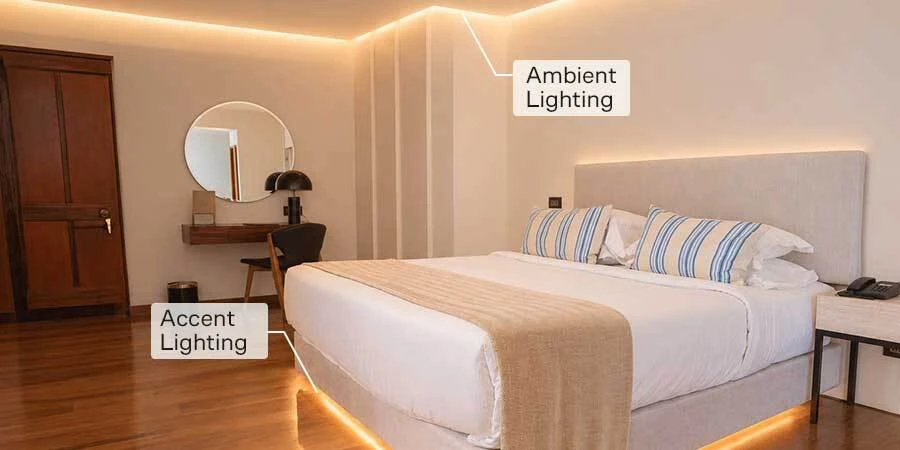
You achieve this effect by combining two distinct types of light across different bedroom placements and applications:
- Ambient lighting provides a base glow across the room. Think of LED strip lights tucked inside a recessed ceiling cove or behind a floating wall panel, providing just enough soft light to navigate the room comfortably after dark without flipping the main switch.
- Accent lighting highlights specific architectural features or furniture pieces to generate depth and visual warmth. Installing subtle LED strips along the underside of a bed frame or behind a padded headboard creates a floating halo effect that immediately makes the room feel less utilitarian and more artistic.
What Is the Best Mood Light for a Bedroom?
There is no single "best" mood light or product because the right LED bedroom setup depends entirely on what you want from your room—and, more importantly, what you're doing in it at any given moment. Lighting a child's bedroom for imaginative play is very different from setting the mood for an adult who wants to unwind while listening to opera.
However, regardless of your age, preferences, or bedroom layout, a great mood lighting setup should be complemented by three key features:
- Low Brightness: Mood lighting shouldn't overpower the room's main lighting, make every little detail visible, or produce uncomfortable glare.
- Smooth Dimmability: Mood lighting is the enemy of a 100% brightness setting. Flicker-free dimming lets you lower the intensity to 10% for late-night relaxation, raise it to 40% when you need a little more visibility, or set it anywhere in between, depending on your lighting setup and whether you have a wall panel or other control devices.
- Smart Controls & Scene Presets: Pairing compatible LED lights with a smart home app lets you easily adapt your bedroom lighting to different activities and occasions. Scene creation allows you to customize and save your favorite settings (think “Snuggle Time” or “After Work”), while color controls let you switch effortlessly between hues with RGB lights or shades of white with tunable white LEDs, among other features.
What Are Some Good Ideas for Mood Lighting In My Bedroom?
Before picking specific colors, consider what your bedroom lighting needs to accomplish throughout your daily routines, your style choices, and overall likes. Once you know this, choosing the right color temperature or RGB hue becomes much simpler. Understanding a little about the psychology of color in lighting design helps also! Let’s walk through some examples:
Are Warm Lights Good for Bedrooms?
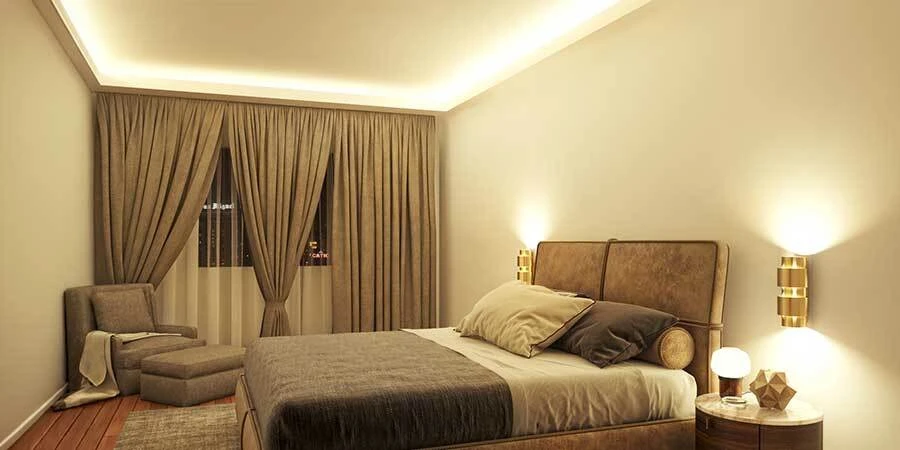
Yes, warm white lighting (2200K–3000K) is an excellent choice for everyday bedroom mood lighting because it evokes the gentle glow of late-afternoon sunlight. It highlights the richness of wood furniture and soft bedding, and replaces harsh overhead brightness with an inviting, lived-in sensation.
In everyday life, warm-white lighting can help set the mood for all kinds of bedroom moments:
- Unwinding After a Long Workday: You've finally finished work after a long commute, changed into something comfortable, and settled into bed to scroll through your phone or watch your favorite show. Tapping a smart dimmer for a warm glow behind the headboard makes the room feel instantly more relaxing.
- Lazy Saturday Afternoon Naps: You're spending a quiet afternoon in bed while it's raining. Dimming your bedroom's perimeter cove lighting leaves the room partially dark and yet not bright enough to interrupt those coveted, refreshing 20 minutes.
- Conversations Before Sleep: You're catching up with your partner about the day, making plans for the weekend, or simply enjoying a little time together. Gentle, indirect 2700K lighting keeps the atmosphere bright enough to see each other's faces without disrupting the sleepiness that arrives.
Is Orange Light Good for a Bedroom?
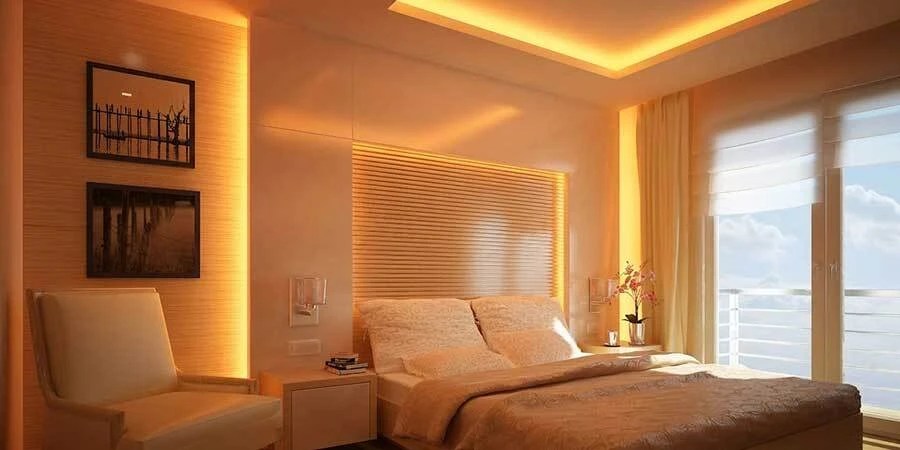
Yes, orange and deep amber lighting are among the most effective mood lighting choices during the transition from day to evening. They're also great alternatives to warm white lighting if your LED lights offer RGB color control but lack dedicated white LEDs or tunable white functionality.
Think of the natural warmth of a crackling fireplace. Those rich amber tones help foster a sense of calm and signal that it's time to leave the day's activities behind and settle into a more restful evening.
Here's how orange and amber mood lighting can elevate everyday bedroom moments:
- Evening Stretching, Yoga, or Breathwork: Roll out a mat on your bedroom floor and switch your cove or under-bed lights to a warm, sunset-orange glow that makes your bedroom feel like a private wellness studio rather than a brightly lit living space.
- Rainy-Evening Music or Vinyl Sessions: Dim the lights to a deep, candle-like orange hue while you lie back and listen to relaxing new-age tunes, entering a lounge-like state.
Because amber and orange light generally contain less short-wavelength blue light than cooler white lighting or your phone’s screen, they can be especially suitable for before bedtime, particularly when kept at a low brightness level.
What Do Red Lights in Your Bedroom Do?
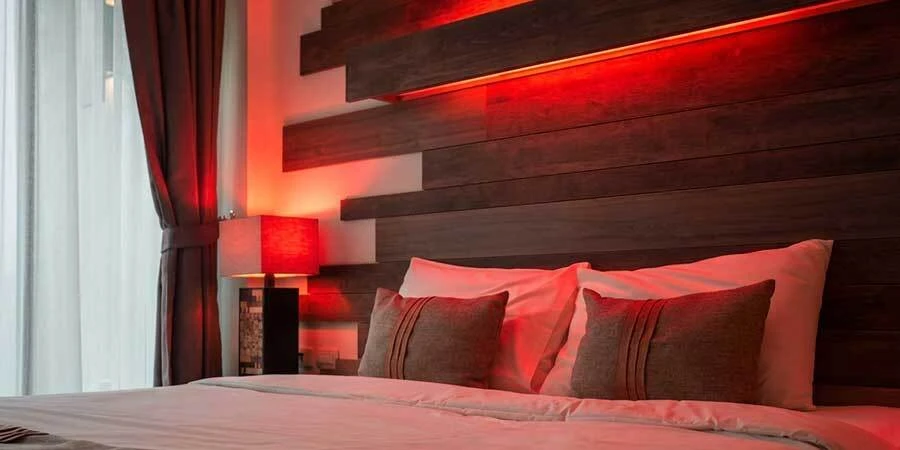
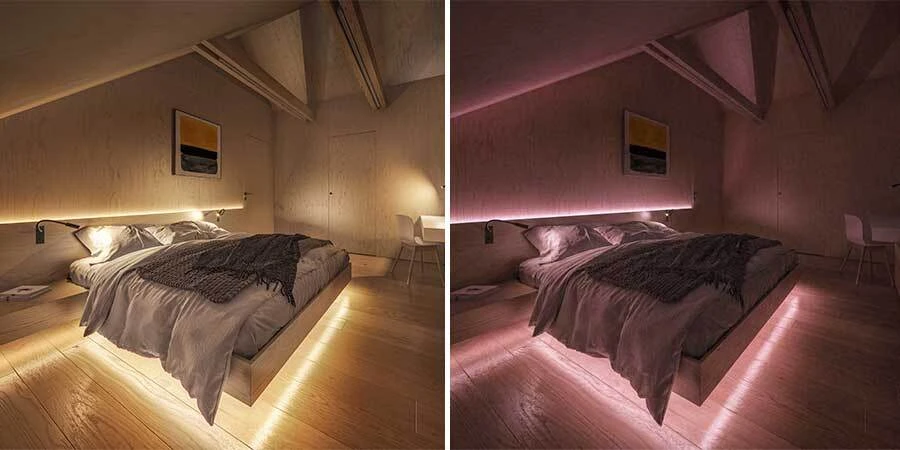
Red light sits at the longest-wavelength end of the visible light spectrum and generally has less impact on your body's natural circadian rhythm and melatonin production than shorter-wavelength light. Beyond its sleep-friendly qualities, low-intensity red lighting brings a velvety feel to a bedroom that immediately slows the room's pace.
In everyday bedroom settings, red mood lighting stands out when you want deep relaxation, romance, or a touch of dramatic ambiance. Set your smart cove or behind-the-bed LED lights to a dim crimson hue to soften the room's edges and evoke passion, love, and the heart, allowing for a sense of unhurriedness.
Is It Good to Have Purple LED Lights in Your Bedroom?
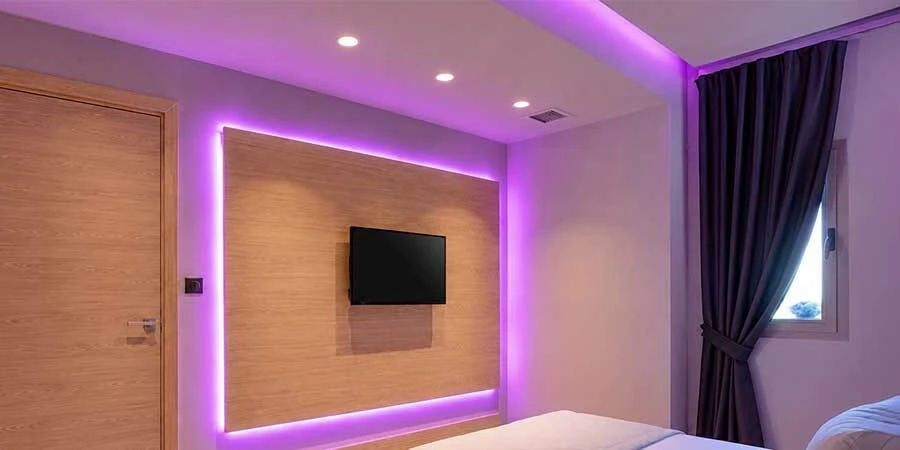
Purple has always had a playful side—think Prince or the Cheshire Cat. That's why purple lighting, like that of UV LED lights, is a great choice for creative, imaginative, or just plain fun bedroom moments.
However, purple works best for evening activities rather than as a light you leave on all night. Since many RGB LEDs make purple by combining red and blue light, keeping them bright at bedtime may interfere with your body's natural transition toward sleep, particularly if you're sensitive to light.
Consider purple mood lighting for these bedroom scenarios:
- Gaming Sessions & Movie Marathons: Add soft, diffused violet backlighting behind your TV or media console to reduce the contrast between the screen and the room's darkness while giving the space an immersive, gem-like glow like Spyro the Dragon’s.
- Dancing to Your Favorite Songs: Violet lighting is a staple of nightclubs and dance floors, often paired with fluorescent effects. Why not bring a little of that energy into your bedroom? Turn on your favorite disco classics or dance anthems and enjoy an impromptu dance party, whether you're dancing solo or with your partner, beside the bed or even on top of it!
Is It Okay to Use Green Light in Bedrooms?
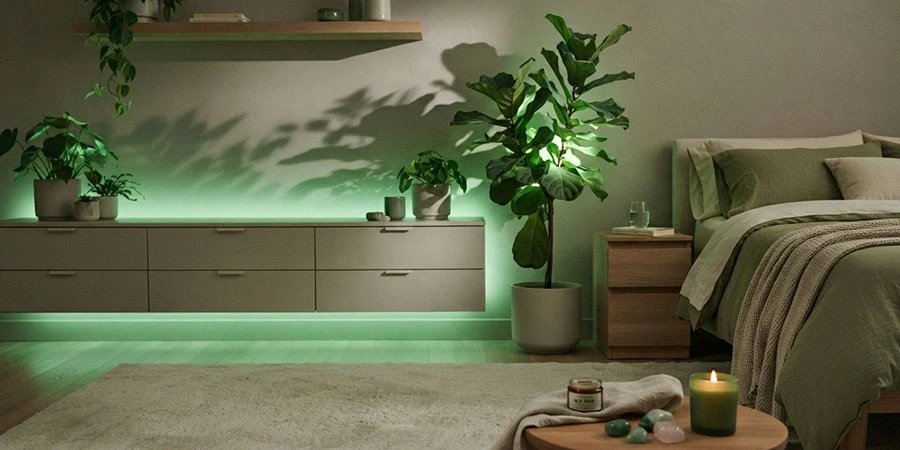
Yes, green light is generally safe to use in a bedroom and can recreate a soothing, nature-inspired atmosphere when kept subtle and indirect. Unlike the stark look of bright, cool-white lighting, a gentle green glow can evoke a calm forest, a lush garden, or a boutique spa.
In everyday bedroom settings, green mood lighting is particularly well suited to moments of relaxation and self-care. Install a dimmable, forest-green LED strip beneath a floating shelf, behind a dresser, or near your favorite indoor plants to cast a nature-inspired shine and leafy shadows. It's a lovely backdrop for an evening face mask, a gentle stretching session, or a relaxing massage.
A Quick Tip Before You Start Your Bedroom Mood Lighting
As we've seen, you don't need to replace your furniture, change your wallpaper, or completely remodel your bedroom to make it suitable for different occasions. With the right layers of light, dimming controls, and color settings, you can transform your bedroom to match how you feel or what you're doing at any given moment.
Our recommendation? Choose an all-in-one lighting solution that offers both RGB colors and adjustable white color temperatures, so you can create all the moods we've explored without needing separate products for each.
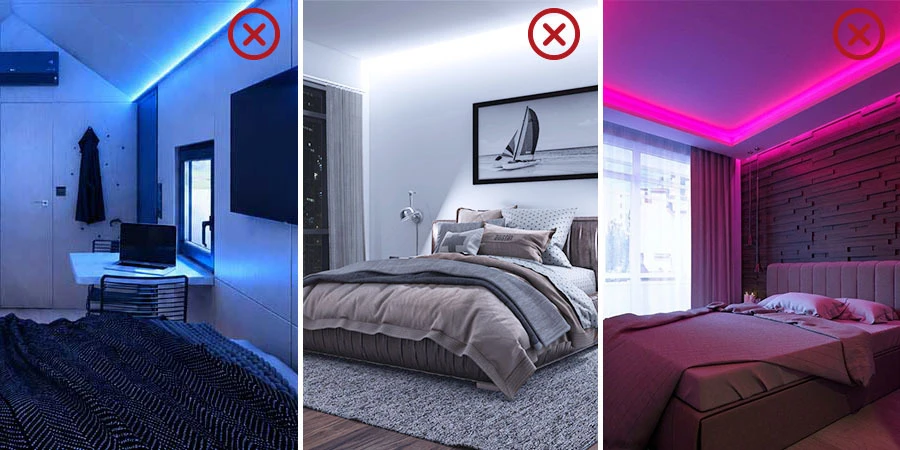
Finally, as you start planning your own setup, there's one final thing to keep in mind: some types of lighting are best avoided when it's time to wind down for the night:
- Blue Light: Rich in short wavelengths associated with daylight, blue light can promote alertness and suppress melatonin production, particularly when it's bright or you're exposed to it close to bedtime.
- Cool White (4500K–5000K+): While great for a garage, kitchen, morning vanity routine, or even your own room for early-daylight activities, crisp, bluish white keeps your nervous system in "work mode" instead of helping you decompress.
- Highly Saturated Neon Colors: Bright-magenta- or electric-cyan-hue blends rely heavily on blue wavelengths and high visual contrast, creating eye strain and overstimulation rather than calmness.
With this in mind, if you're ready to bring custom mood lighting into your bedroom and need help choosing the right LED strips, diffusers, drivers, or smart controls, reach out to our lighting design team at Flexfire. We're experts at matching lighting setups to your vision, your needs, and—why not?—your mood!