
Pet-Friendly House Design: LED Lights for Dogs, Cats & More
Discover pet care tips for choosing indoor and outdoor LED lighting, and learn how lights for pets can be customized for comfort and safety!
- -When designing a pet-friendly home, it’s essential to consider lighting from your pet’s perspective and account for species-specific needs.
- -With its non-toxic materials, durability, lower heat and noise emissions, and extensive customization options, LED lighting is a versatile choice for homes with pets.
- -Many of your existing lighting applications are already pet-friendly, while others are simple DIY projects that can be easily incorporated into your home.
When we design a pet-friendly home, our checklist is usually pretty standard. We swap delicate rugs for durable, washable textiles, opt for performance fabrics designed to withstand muddy paws, and choose low-VOC paints because we know our furry family members spend a lot of time breathing close to the floor.
Yet one major element of home design we almost always overlook is lighting.
We tend to think about it strictly through a human lens. We focus on where we want to read, how to make our kitchens look bright and airy, or how to set the right mood for dinner parties and patio meetups. But what does your home look like from your pet’s perspective? Their species-specific vision means they experience light, color, glare, and brightness differently than we do, while our lighting habits can also affect their natural daily rhythms.
If you have dogs, cats, or other animals at home, choosing the right lighting is about more than keeping your living room tidy and fur-free. In this blog, we’ll explore how thoughtful LED lighting choices can help create a calm, comfortable, and safe environment for every member of your household.
What Type of Lighting Is Best for Dogs? (& Other Pets!)
Different pets experience light in vastly different ways, so a single guide covering every species could take years to read—and even longer to organize. With the wide variety of animals people keep as pets today, it’s simply not practical to cover them all in one place.
However, one general truth remains: what feels cozy and comfortable to us lighting-wise might seem glaring or disorienting to an animal whose senses are much more sensitive to its surroundings.
With that in mind, the following sections cover some species-specific LED lighting tips for the most popular household pets, from dogs and cats to bunnies, birds, reptiles, and more:
Lights for Dogs: Navigating Contrast & Senior Years
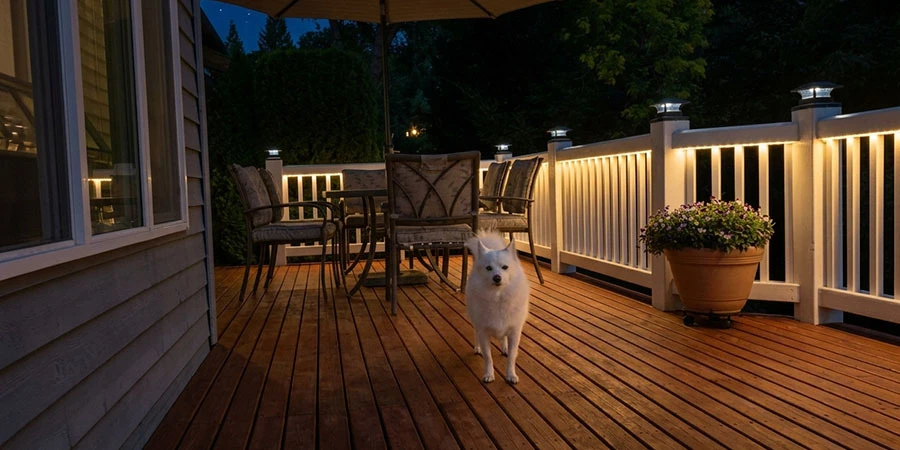
Dogs are our constant shadows, pacing from room to room right alongside us. While they don’t see in total black and white, their color vision is limited primarily to blues and yellows, which can make contrast and shadows appear more pronounced.
Here are a few things to consider when choosing LED lighting for a home with dogs:
- Special Care for Senior Dogs: As dogs age, many experience canine cognitive dysfunction or failing eyesight. Harsh, directional spotlights or sudden transitions from pitch-black rooms to blazing overhead lights can trigger severe confusion and sundowning anxiety.
- The CCT Strategy: When choosing your space’s color temperatures, stick within a warm-to-neutral white range (2700K to 3500K) during the day—and, if possible, drop to a very warm amber (2200K) in the evening. For rescue dogs or aging seniors prone to evening anxiety, avoid cold white light (4000K+) as the sun goes down; just like our circadian rhythm, a dim glow signals their bedtime and helps settle restless pacing.
- Outdoor Runs & Yards: If you use security lighting outside, choose shielded fixtures directed downward so you don't blind your dog as they navigate the yard at night.
Lights for Cats: Keep Low-Light Sensitivity & Sunbeams in Mind

Cats are crepuscular, meaning they’re naturally most active around dawn and dusk. Their eyes also feature a light-reflecting layer within the eye that enhances their ability to see better in the dark. This enhanced sensitivity makes harsh glare and sudden changes in brightness especially important to consider in a home with cats.
Keep these factors in mind when planning LED lighting for your feline-friendly spaces:
- The Glare Factor & Color Temperature: Shiny floors reflecting harsh overhead downlights or flickering, low-quality bulbs can drive a cat bonkers. Opt for soft, warm-white (close to 2700K) diffused lighting that prevents those pesky uneven reflections. Also, because they spend much of the day looking up from low vantage points or lounging on top of bookshelves, exposed bulbs can act like tiny lasers stabbing into their sensitive retinas.
- Preventing Eye Strain: Keep direct-view LED strips out of low-to-the-ground zones where cats love to play or sleep, like the underside of low consoles facing outward. Aim for indirectly lit coffee tables or deep frosted lenses to spread out the light sources completely.
- Shadow Play: Cats love dynamic, dappled lighting. Placing a decorative floor lamp or other low-height options near a leafy houseplant creates natural, shifting shadow patterns that stimulate their predatory instincts in a calming, low-stress way.
Rabbit Lighting: Creating a Gentle, Low-Stress Burrow Vibe
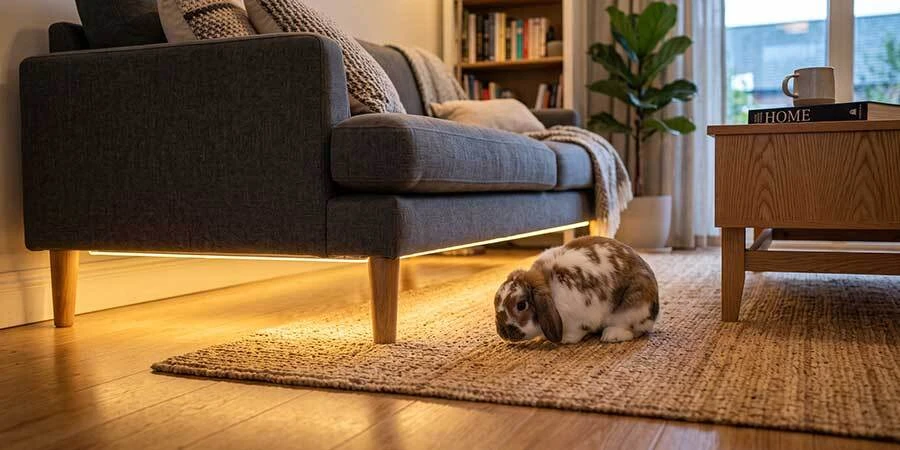
Surprisingly, rabbits are among the most popular pets in America. As prey animals with wide, panoramic vision, they’re especially alert to changes in their surroundings and can be easily startled by sudden shifts in illumination, shadows cast by overhead predators, and high-frequency flickering.
Here are a few rabbit-specific factors to keep in mind when planning your LED lighting:
- True-to-Life Colors Matter: Because rabbits are naturally cautious, they’re constantly exploring and assessing their surroundings. Choose lights with a CRI (Color Rendering Index) above 90, which provides more accurate color and detail, helping rabbits better distinguish shapes, textures, and changes in their surroundings, such as telling a fresh lettuce leaf from one that has spoiled.
- Promote Calmness: As with dogs and cats, choose warm white CCTs that create a calm, comfortable environment rather than heightening alertness. Constant stress can lead to frights or fatal incidents, since they’re very delicate animals.
- Lighting Placement: Position light sources behind or beside their habitat rather than blasting directly down from above. This mimics the safe, filtered light of an underground burrow entrance and gives them dim, quiet zones to retreat into total shadow whenever they nap.
Lighting for Birds, Cage & Tank Pets: Bringing the Outdoors In
For pets who spend some or all of their lives indoors, artificial lighting can meaningfully affect their daily rhythms and overall environment. But different species respond to light in very different ways, so what works for one pet may not be appropriate for another. Here are a few important considerations for birds, reptiles, and fish:
- Birds: Birds can perceive flicker at frequencies often invisible to humans, so the quality of an LED driver and knowing the reasons why it could flicker matters. Pet birds may also benefit from appropriately designed full-spectrum lighting, including UVA LED options where recommended for the species, along with a consistent day-and-night schedule that provides plenty of uninterrupted darkness.
- Reptiles: For snakes, iguanas, and other reptiles, lighting and heating often go hand in hand. Needs vary significantly by species and habitat, so match UVB exposure to the animal’s natural environment and keep it within appropriate levels. Avoid bright-colored night bulbs, which can interfere with a reptile’s normal dark period. When nighttime heat is necessary, a heat source that produces little or no visible light can help maintain warmth without disrupting the light cycle.
- Fish: Aquarium lighting should be IP67- or IP68-rated for water protection and follow a consistent day-and-night cycle suited to the species and aquarium setup. Too much light can encourage excessive algae growth and may contribute to stress, while too little may not support plants or replicate a natural environment. Smart LED systems can help by creating gradual sunrise and sunset transitions.
Why High-Quality LED Technology Is Ideal for Pet Owners
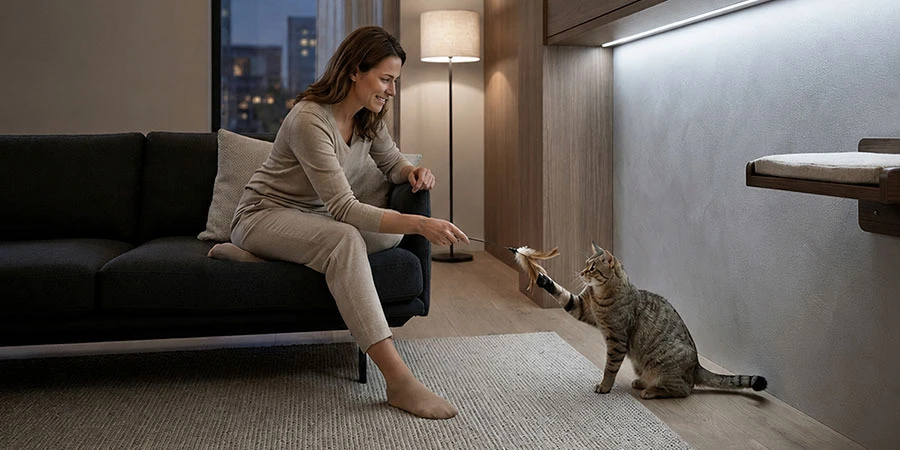
You may be wondering what type of lighting can accomplish all of this while meeting the widest range of needs for both humans and pets alike. Well, if you’re upgrading your home’s lighting to better accommodate your animals, old-school incandescent bulbs and blazing halogen lamps aren’t the right options (or the most practical).
Here’s why LEDs are such an appropriate choice for a pet-friendly home:
- Lower Heat Emission: Old-style halogen and incandescent bulbs convert most of their energy into heat, getting blistering hot within minutes. Ask any vet about the curious cat who jumped up to bat at a halogen floor lamp or the bird who brushed a wing against an exposed bulb, and you’ll understand why cooler-to-the-touch LEDs are a literal lifesaver.
- Better Builds: Pets are unpredictable. A stray toy, an enthusiastic tail wag, or a midnight zoomie can send objects flying. Because LEDs are built using solid-state components rather than fragile glass vacuum chambers, they withstand slight occasional bumps much better.
- Sweet Silence: Older fluorescent ballasts and cheap lighting drivers often emit a high-pitched, ultrasonic electrical whine that humans can't hear, but drives animals with sensitive ears (like rabbits) quietly bonkers. High-quality LED power supplies normally operate in complete silence, removing a hidden source of low-grade environmental stress from your home.
- No Toxic Gas or Heavy Metal Hazards: Traditional compact fluorescent lamps (CFLs) contain hazardous materials like mercury vapor inside fragile glass tubes. If a curious cat or an energetic dog knocks one over, it creates an immediate toxic hazard. LED electronics are free of mercury, meaning an accidental break is just a minor cleanup rather than a household emergency.
- Low Electromagnetic Interference (EMI): Cheap lighting components can throw off stray electromagnetic frequencies that confuse animals with acute sensory perception or interfere with specialized monitoring equipment (like pet cameras and microchip feeders). Modern LEDs are engineered with clean power supplies that keep your smart home running smoothly without creating invisible static in your pet's environment.
The Best, 100% Pet-Friendly Home Lighting Ideas
Although every animal has its own unique needs, the versatility of LED technology allows us to bring many of these lighting strategies together in one home. Integrating these ideas doesn’t require a total architectural overhaul. With custom LED applications, you can create lighting that works for both people and pets, adapting to different spaces, routines, and needs:
1. Toe Kick Lighting for Safety
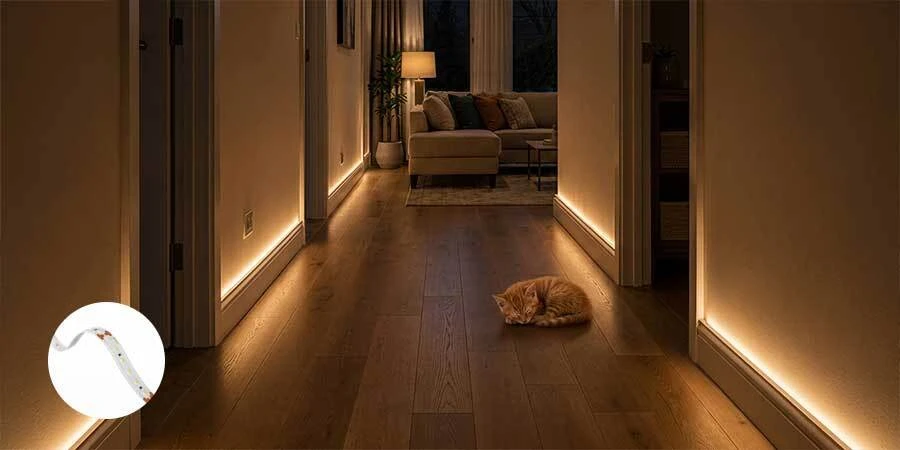
Every midnight kitchen run comes with that heart-stopping, split-second panic of wondering if you’re about to step squarely on a sleeping cat or a stretched-out dog. Toe-kick LED strips throughout the home—from corridors and living spaces to the base of your kitchen cabinets—solve this by washing the floor in a warm, low-level glow.
For your pets, especially nocturnal cats who love to prowl and weave around kitchen islands while you sleep, it provides a clear, comforting path of light, helping you spot them before you accidentally startle them in the dark.
Your Pets Will Love This: Outline White LED Strip Light
2. Motion-Lighted Pet Feeding Station
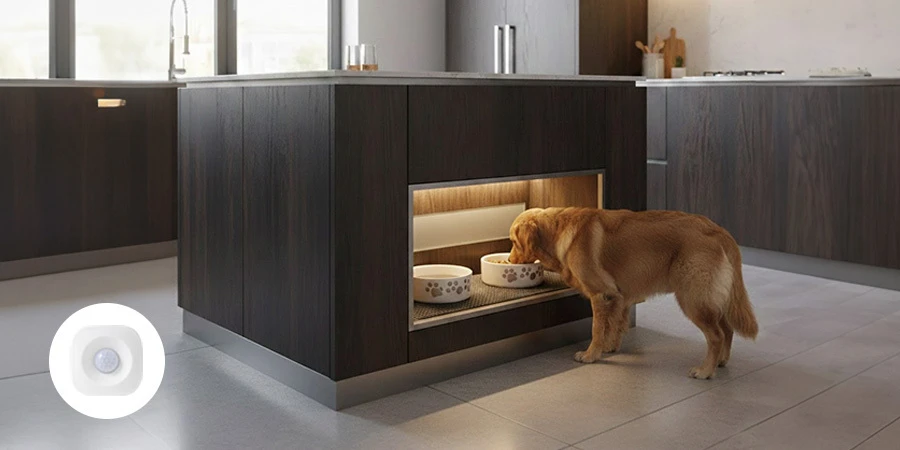
Building a low-profile, integrated wood platform at floor level equipped with motion-activated LED sensors completely transforms the spot where your pets eat and drink. The moment your dog, rabbit, or cat steps up to the station for a midnight sip of water or an early morning meal, gentle illumination from a recessed, indirect LED strip washes over the bowls.
Your Pets Will Love This: Leona® Smart Home Motion Sensor
3. Diffused Lighting to Avoid Confused Pets
Low-quality or poorly diffused LED strips can create visible hotspots and harsh reflections on polished tile floors, glass doors, and windows. To a bird mid-flight, a sharp window reflection may look like open air, leading to a terrifying crash; to a dog or cat racing across slick tile, blinding light bounces can distort depth perception and make them misjudge their footing.
LED strips with integrated diffusion help soften the light at its source, blending individual dots into a smooth, continuous glow and reducing harsh reflections. Humans enjoy a clean, upscale architectural aesthetic that flatters the space, while pets can move freely across any slick surface or near windows without ever getting disoriented by lighting.
Your Pets Will Love This: Verity™ SOB Diffused LED Strip Light
4. Outdoor LED Strip Lights for Exterior Animals
Stepping out onto the back deck or patio for that final late-night dog break often means navigating pitch-black steps or blinding the neighborhood with aggressive floodlights. Tucking water-resistant LED strip lighting underneath deck railings or along stair risers creates a secure, welcoming perimeter.
Even more so when the lights are tunable white, allowing you to adjust the color temperature for different activities. Cool white provides humans with a clearer view of the yard for tasks like scooping up after pets or keeping an eye out for wildlife, while warm white can create a softer, less startling environment for outdoor-dwelling cats or dogs that pace the yard at night.
Your Pets Will Love This: IP65 Architectural Tunable White LED Strip Light
5. Tunable White Daylight Simulators
Indoor pets like birds, reptiles, and even dogs and cats spend much of their lives under artificial light, making it important to consider how that lighting fits into their natural day-night rhythms. By installing tunable white LED strips within architectural ceiling coves or crown molding, you can create a biology-conscious lighting system that fills the space with soft, indirect ambient light.
Paired with a smart control system, tunable white LEDs can follow the natural progression of daylight, shifting from cooler, brighter light in the morning to warmer, dimmer tones as evening sets in. Maintaining a more consistent light cycle can help support healthy daily rhythms while giving your pets a calmer nighttime environment. And, of course, you get the added benefit of beautiful, upscale cove lighting!
Your Pets Will Love This: Architectural Tunable White LED Strip Light
6. Accent Lighting to Showcase Memories
Our pets are family, yet their favorite toys, custom portraits, or paw-print memory boxes often get lost in dark corners of the bookshelf. Installing subtle LED strips along shelves highlights these special corners, turning your furry friend's legacy into warm, glowing art or decor.
Your Pets Will Love This: Accent White LED Strip Light
7. Automatic Pantry Door Light for Mornings & Emergencies
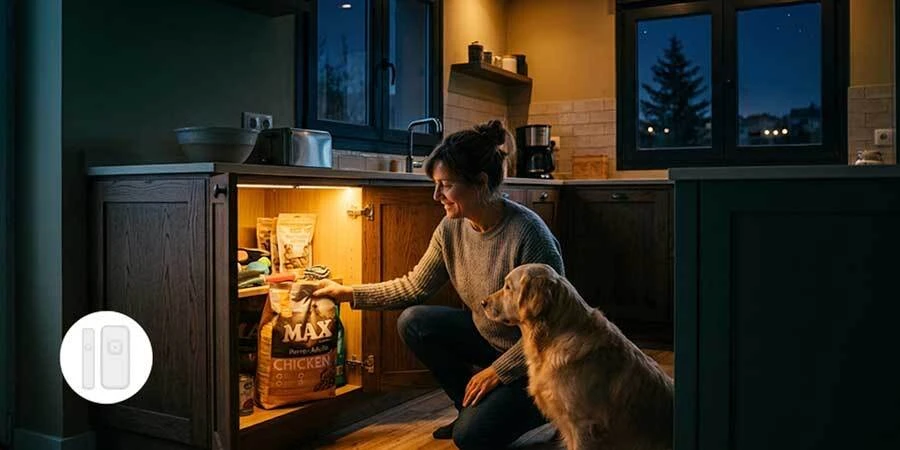
If you’ve ever fumbled around a dark utility room or kitchen corner at 6:00 AM trying to measure out kibble while half-blind, you know how annoying morning feeding can be. A door-activated LED strip can provide instant visibility as soon as you open a cabinet or pantry, making it easier to measure precise portions, read tiny labels, and find bowls, medications, prescription food, or other pet supplies without switching on a glaring overhead light.
The light comes on automatically when the door opens and shuts off when it closes, so there’s no need to fumble for a switch—and no risk of a curious cat sneaking into an open, unattended dark closet.
Your Pets Will Love This: Leona® Smart Door Sensor
At Flexfire, We Believe Lighting Is for Everybody
One of our fundamental principles is making premium LED lighting easy to understand and accessible to everyone—and that includes your furry friends. Looking to design your space with their well-being in mind because you love them too much not to? Contact our team today, and let’s create a project that’s simply purrfect.